
 English
 Français
  Deutsch
 Italiano
 Turkish
 Greek
Greek Serbian
Sterjo Spasse, a novelist and short story writer




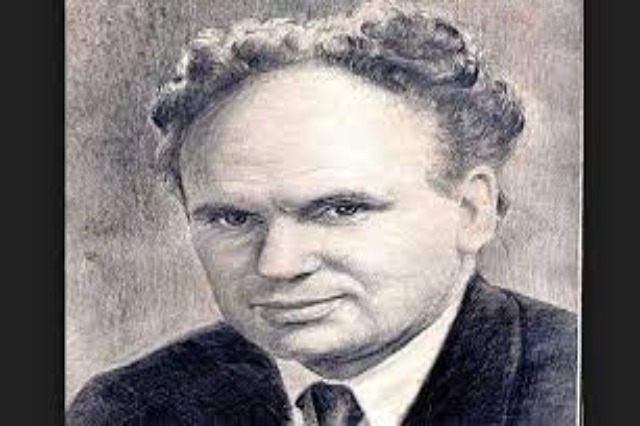
Sterjo Spasse is a novelist and short story writer of (Slav) Macedonian origin from Lake Prespa. Spasse was born in 1914 in Gollomboc.
He attended primary school in Korça, while he attended normal school in Elbasan. Then he started working as a teacher in the village of Derviçan in the south of Gjirokastra. It was while teaching in the little village of Derviçan south of Gjirokastra that the eighteen-year-old Spasse began writing his first novel, and his masterpiece, “From life to life – Why!?, Korça 1935, usually referred to for short as Pse!? (Why!?). Like Haki Stërmilli’s Sikur t’isha djalë (If I were a boy), Pse!? is written in the form of a diary and focusses on the tragic dilemma of a young intellectual in a backward rural society. He later studied pedagogy in Florence, Italy, but failed to pass the final exams. With Kutel, Kokona and Haki, he was the co-founder of the temporary “Literary Magazine” in Tirana on February 15, 1944.
At the end of 1944, shortly after the communist victory, he had published his first work of socialist realism in the party press, the newspaper “Përpara” of Korça.
After the war, he worked in the Ministry of Culture Education for the drafting of school textbooks with Aleksandër Xhuvani, Dhimitër Shuteriqi and Qemal Draci. He also worked in pedagogical and literary magazines: “New School”, “Popular Education”, “Our Literature”, “November”, etc. and next to the League of Writers and Artists of Albania. While he spent his last time in Tirana, as a freelance writer.
Post-war Marxist critics were unable to deal with Pse(Why!!), though it may be considered one of the great Albanian novels of the early twentieth century. Although Pse?! is the work of youthful inspiration by a writer as yet unskilled in his métier, this first novel contrasts favourably with all of the later ‘classics of socialist realism’ that he produced.
The literary activity of Sterjo Spasses is diverse. He wrote pedagogical works, translated textbooks, wrote various articles, monographs, stories, novels, etc.
His activity, especially the literary one, began in the thirties of the last century. This was a period in which Sterjo Spasse distinguished himself with his creations, especially in the field of stories and novels. He published four collections of stories: “Youth crown” (1934), “In the arms of a woman” (1934), “The bride without a veil” (1944) and “Greetings from the village” (1958) as well as ten novels:” in 1935 – which is considered his masterpiece, “Aphrodite” (1944), “They were not alone” (1952), “Aphrodite again in the village” (1954), “Lake shore” (1965), “Fire… ” (1972), “Awakening” (1973), “Torches” (1975), “Death and Freedom” (1978), and “Insurgents” (1983).
“Rilindja” Publishing House published a set of works in eight volumes in 1968, while from time to time it has published different works. In 1980, the novel “The Awakening” was translated into English.Sterjo Spasse passed away in 1989.
/Klara Ruci/
Të ngjashme
Latest News
Most read






 RTI
RTI