
 English
 Français
 Deutsch
 Italiano
 Turkish
 Greek
 Serbian
Tabaku: EU Negotiations Should Reflect Real Changes in Citizens’ Lives




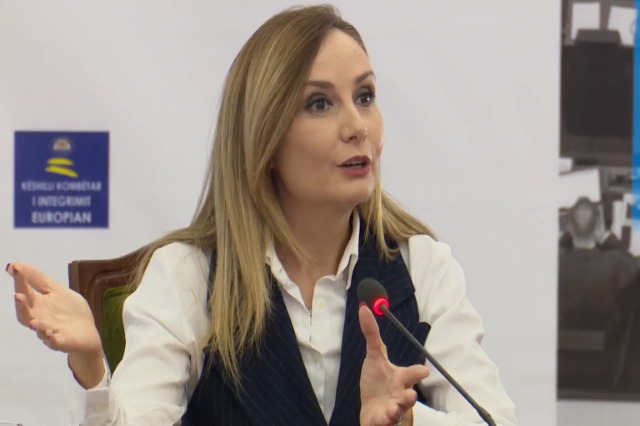
Jorida Tabaku, Chair of the National Council for European Integration, emphasized today at the opening ceremony of the ninth edition of the European School that Albania is at a crucial juncture in its relationship with the EU.
Tabaku expressed gratitude to Ambassador Gonzato for his patience during the integration process and for the support provided to the school. “We have worked hard to establish a suitable and prioritized agenda, and the ambassador remained committed to fully developing the school this year. With a record 225 participants in this class, I hope it will be the best of all the groups we’ve initiated. We are at a pivotal moment; negotiations have opened, presenting extraordinary challenges for public administration and municipalities, which will implement 70% of EU legislation, as well as for businesses,” she stated.
She added that negotiation groups should be expanded to include young people.
“We are undergoing a cultural shift that Albania must embrace with a positive force of change across all sectors, particularly in business. We have aimed to include representatives from central administration, local government, and businesses—young people who are currently in Chambers of Commerce and trade unions, and I hope they will be part of the negotiation groups,” she said.
Tabaku highlighted her significant contributions over the years to ensure the continuity of the school’s activities but noted that political factors continue to create division during today’s ceremony.
“The agenda is highly interactive, aided by the EU delegation and the ambassador, who guide us from the rule of law to the elements that need consideration throughout this process. We are at a moment when everyone’s energy should be focused on these changes, initiating discussions on economic criteria alongside political ones. We should not have the integration process merely on paper but rather as a source of real change for Albanian citizens. I want young people to contribute and live here, influencing the reverse of brain drain from abroad. We must refuse to leave and instead invest in our future here,” Tabaku concluded.
/a.p./
Të ngjashme
Latest News


Most read










 RTI