
 English
 Français
 Deutsch
 Italiano
 Turkish
 Greek
 Serbian
Tekke of Melani in Nepravisht of Gjirokastra




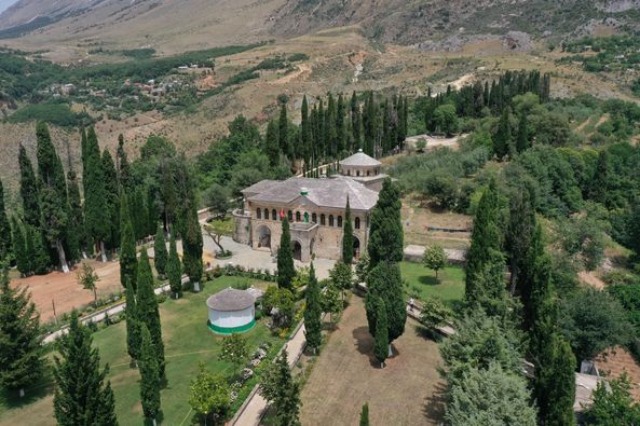
The Tekke of Melani is a religious center for Bektashi Shiite Muslims, but the place where this Tekke is located has been inhabited since ancient times. A massive wall of polygonal and rectangular blocks surrounds the end of the territory, which is thought to have been an Illyrian fortification. The discovery of pottery from the 4th century BC also supports this idea, that this area was inhabited. The wall was rebuilt in the 5th or 6th centuries AD, when many of these ancient hill sites were re-fortified, after the fall of the Roman Empire. It is thought that these may be the remains of Justinianopolis, a 6th century city for which an exact location has not yet been determined. Melani was also a fortified site in the Middle Ages, as a small church exists on the southern side of the fortified enclosure. A cobblestone road leads visitors to Teqe e Melani past an Ottoman-style fountain, the original destination of the aqueduct.
The current Teqe building was erected in 1800 by father Aliu of Gjirokastra, whose grave is in Turbe in front of the main structure of the Tekke. The current Tekke of Melani was built on top of an earlier Bektashi monastery, which was run by Baba Hasan. Initially, the Tekke was located on the main road along the eastern part of the Valley. In 1809 Lord Byron passed through here on his journey from Preveza to visit Ali Pasha Tepelena. But this route was bypassed when Ali Pasha built a series of bridges and roads along the valley. To get to Melan you need to arrive in the village of Grapsh, 4 km from the village of Gline.
/Klara Ruci/
Të ngjashme
Latest News
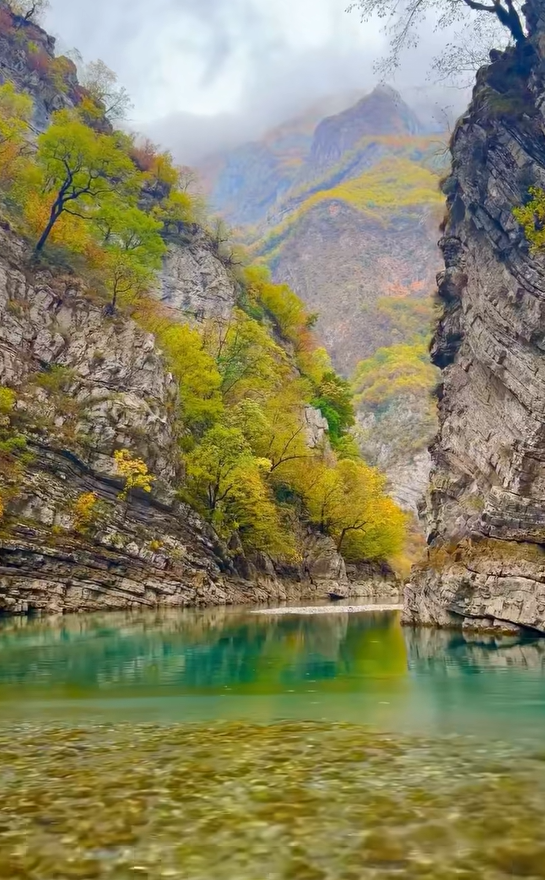
Shala River in Autumn: Crystal-Clear Waters and Mountains Create a Breathtaking Landscape


Vlora Defies November Chill as Tourists Enjoy Beach and Sea in Autumn






Most read










 RTI