
 English
 Français
 Deutsch
 Italiano
 Turkish
 Greek
 Serbian
“TgTourism”: Albania – Land of Eagles, a combination of warm colors and ancient aromas




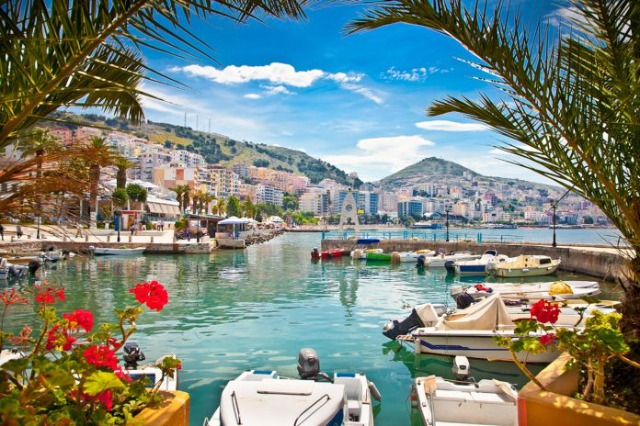
Albania is the Land of the Eagles, where you will discover an interweaving of warm colors and ancient aromas. Bunkers will accompany your journey everywhere in Albania, a key to understanding the complex place, divided between a painful past and a modernity projecting new urban centers with bustling streets and festive city lights, according to the Italian daily “TgTourism”.
A proud country in development, manifested by the increasing number of tourist spots that are more sustainable year after year.Growing interest in Albania is confirmed thanks to its great potential and unexplored natural beauty, combined with affordable prices.
How to get to Albania? The 470 kilometers of Albanian coastline attract more and more tourists from Germany, Poland, France, and Northern Europe every year.
Italians are the first in terms of frequency (around 436 thousand in 2018, 20% more).The symbol of the two-headed black eagle, Albania’s flag against a red background: one head from the East, the other from the West, overlooking Rome and Constantinople is the answer to why the beaches are crowded.
“It’s impossible not to copycat Italy, but we don’t want to make your mistakes,” said Prime Minister Edi Rama earlier, describing the awareness of the desire to reap the benefits of a tourist opportunity that has finally come, but also seeing the risks.
From Italy, “Adria Ferries” guarantees sea routes from Trieste, Ancona, and Bari to Durres. Traveling by car is more attractive in the Land of the Eagles.
What to see in Albania? Beaches and ancient cities
On the way to the Gulf of Vlora – which was the first capital, Tirana has been since 1920 – you will admire the sandy beaches and one of the ten protected areas of the country. The Mediterranean country has 15 nature parks and covers many mountainous areas, a tourist sector on which the current government aims to focus. Among the most important beaches in the south of Vlora, where the Adriatic Sea meets the Ionian Sea, are Ksamil, Orikum, Himara up to the small pearl of Saranda; in the north Velipoja and Shengjin; in the center, besides Durres, there are the Lalez Bay, Mount Robit, and Spille. But the road is filled with gems like the ancient city of Berat, a UNESCO heritage site, “the city of a thousand windows.”
The fortified neighborhoods of stone houses, churches, and ancient mosques, Berat still represents an example of centuries-old tolerance and peaceful coexistence between Christians and Muslims. The Gorica Bridge, 127 meters long from the Ottoman era, above the Osum River, connects the neighborhoods of Gorica and Mangalem.
Where to go in Albania? Vlora
The coast of Vlora offers, besides beautiful walks, unforgettable culinary experiences. A boat trip around the Karaburun Peninsula, immersed in the Karaburun-Sazan National Marine Park, is highly recommended as a beloved destination for diving enthusiasts, caves, and untouched bays. Also, the beaches in the Orikum area, 20 km south of Vlora, should not be missed. The excursion from Vlora to Saranda is very beautiful. Visit the archaeological area of Apollonia, in honor of the temple of the god Apollo, from which some ruins remain. Established in 588 BC by Greek colonists from present-day Corfu, Apollonia was an important port and also the starting point of the Via Egnatia. It became a Roman colony, included in the province of Epirus. The Roman Emperor Octavian studied there in 44 BC and precisely there learned the news that his uncle, Caesar, had been killed.
Bunkers in Albania
You can’t leave Albania without delving into one of its claustrophobic bunkers. The one in the center of Tirana, not far from Skanderbeg Square, is worth a visit. It is one of the largest, anti-seismic and anti-atomic, hiding a tunnel directly connected to the Ministry of Interior. It includes, besides many rooms for soldiers and defense equipment, the minister’s working room and bedroom, as well as several cells and torture rooms. Italian architecture and design genius are clearly evident in the Palace of the King in Tirana. The last royal palace built in Europe, the only one in which a king has never slept. Gherardo Bosio and other architects of the Giò Ponti school worked on the construction of the palace, 1250 square meters surrounded by 75 hectares of forest and elegant furnishings.
Durres
Durres also preserves Roman remains, walls, and an amphitheater in the city center.The coastal city offers culinary pearls with views of the port, wide boulevards with trees, and trading streets.
Tirana
Tirana has been the capital of Albania since 1920. Founded in 1614, it is today the economic, financial, political, and commercial center of Albania. Moreover, it is home to several public institutions and universities.
What to do in Tirana?
Visit the Ethem Bey Mosque, Clock Tower. Your journey can begin by visiting the main museums and sights such as Skanderbeg Square, the Ethem Bey Mosque – built between 1798 and 1812 – and the 35-meter-high Clock Tower – built in 1822.
Visit the National Museum
To learn about the history of the Albanians, this is the place to visit. The National Historical Museum is the most important museum in Albania and contains a well-documented history of the country. The museum is divided into eight pavilions: Antiquity, Middle Ages, Renaissance, Independence, Iconography, National Liberation War, Anti-Fascism, Communist Terror, and Mother Teresa. The Communist Terror Pavilion offers views, documents, and videos of the persecution suffered by Albanians during the regime.
Bunk’Art2
The phase of a project aimed at preserving the memory of the communist era, built by Enver Hoxha during the communist period, now a museum and tourist attraction. Bunk’Art2 consists of 24 rooms spread over an area of over 1000 m2. Some rooms recreate the atmosphere of that historical period, while others reflect artistic installations inspired by that era.
Tirana Castle
Tirana Castle is located in the center of the city, owned by the Toptani family, one of the wealthiest families in Albania and the Balkans. The “Old Market” of the castle is the latest addition to Tirana, where modernity meets tradition.
“New Bazaar”
The New Bazaar is a neighborhood in Tirana. The name of the neighborhood comes from the food market, which is located in the area. It is located east of the central street. The New Bazaar is part of the historic center of Tirana and one of the oldest areas of the city.
/k.s/
Të ngjashme




Latest News










Most read










 RTI