
 English
 Français
 Deutsch
 Italiano
 Turkish
 Greek
 Serbian
The Cathedral of Shkodra




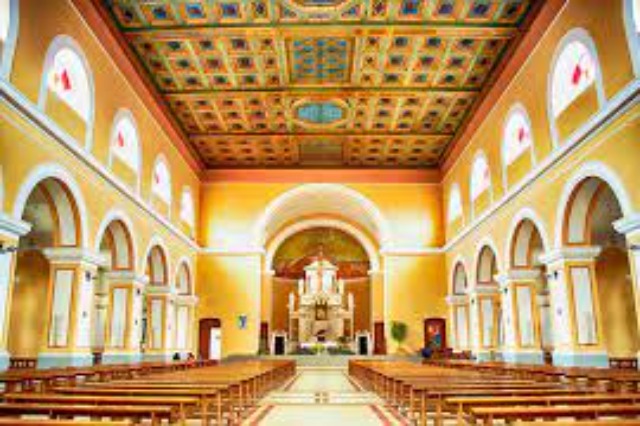
One of the grandest in the Balkans, St. Stephen’s Cathedral in Shkodër also has a remarkable survival story.
The Cathedral of Saint Stephen, the patron saint of Shkodra, is also known as the Great Church. Once upon a time, the cathedral was located within the walls of Rozafa Castle until 1478, when the Ottoman occupation of the fortified city turned it into a mosque. Hundreds of years later, in 1851, the Shkodra believers officially asked the Sultan in Istanbul for the cathedral to be built in Shkodra. After 7 years, in April 1858, the construction of the Cathedral began.
The building withstood the ravages of the Balkan wars, earthquakes and communist dictatorship. In the stories of the city, it is said that all the Catholic families of Shkodra contributed to its construction, Pope Pius IX, the Sultan of the time (since Shkodra was under the Ottoman occupation) and even the Emperor of Austria Franz Joseph. The cathedral, which is known as one of the largest in the Balkans, was blessed by His Holiness Pope John Paul II in 1993.
Location and architecture
The Great Church is in the heart of the city, very close to Shkodra’s pedestrian street, one of the most frequented areas by local and foreign tourists. The main building resembles the body of the Paris Cathedral. In the old photos, the frescoes on the walls stand out, a part of which was the work of the Shkodra painter Kol Idromeno. In 1967, the Shkodra Cathedral was turned into the Sports Palace. Fortunately, it did not suffer serious damage and with the change of the political system, it became the refuge of believers from the entire north.
The building lies on a well-thought-out plan and is preceded by a large square in front. Its end part is harmoniously connected to the bell tower and, on one of the faces of the tower, the clock stands out. The first clock for the walls of the belfry was donated by one of the families of the town.
The cathedral, symbol of freedom
Shkodra has the largest number of martyred clerics who humbly gave their lives for the freedom of faith and the testimony of God’s love. Many parishioners, high clergy were brutally tortured and killed during the dictatorship. They have been beatified by the Vatican for the protection of Christianity and every year in the Cathedral, a mass is dedicated to their beatification.
/k.s/
Të ngjashme




Latest News










Most read










 RTI