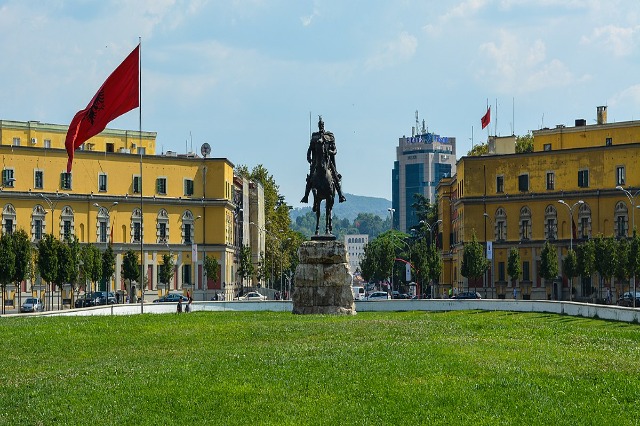
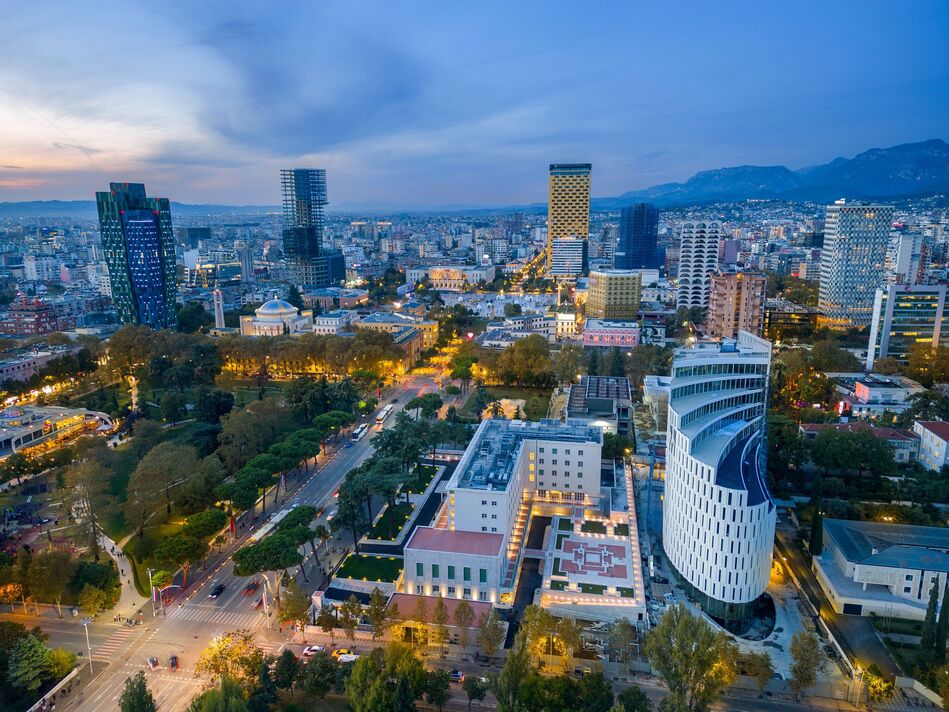
The Boulevard of Martyrs of the Nation is one of the most important streets in Tirana, starting from Skanderbeg Square.
This tree-lined avenue is home to several iconic buildings and numerous meeting places. It is the perfect spot for a pleasant and relaxing stroll. Along the Boulevard of Martyrs of the Nation, you will find the Pyramid of Tirana. This modern structure, built in the mid-1980s as a mausoleum for the dictator Enver Hoxha, who ruled Albania from 1944 until his death in 1985, has since been transformed into a contemporary cultural center.
The Bridges, Markets, and Bunkers of Tirana
The Tabak Bridge is one of the oldest witnesses to Tirana’s history. Built over the Lana River during the Ottoman era, it was part of the St. George Road, a long route that once connected Tirana with the highlands to the east of the city. It was used by livestock traveling to the city from the pastures, and its name derives from the many leather factories that were located in the area.
For those looking to immerse themselves in the colors and aromas of authentic Tirana, a visit to the New Bazaar is a must. Located just a few minutes’ walk from Skanderbeg Square, this vibrant market features over 150 shops open daily from 7 AM to 10 PM, where you can purchase typical Albanian products, spices, honey, textiles, and much more. There are also bars and restaurants where you can enjoy local specialties or take a break during your shopping.
If you want to learn about the history of the last 100 years in Tirana and Albania as a whole, visit Bunk’Art, a real anti-atomic bunker covering over 2.5 square kilometers and containing 106 rooms. Within the rooms included in the tour itinerary, you can understand how people lived inside the bunker, thanks to installations and period photographs. The visit to Bunk’Art lasts approximately an hour and a half.
Blloku: The Neighborhood of Nightlife
Blloku originated as a neighborhood reserved for the elite of the communist party. Access to this area of Tirana was prohibited for ordinary citizens, but with the fall of the communist regime, it gradually transformed into one of the liveliest neighborhoods in the entire Albanian capital. Bars, restaurants, clubs of all kinds, luxury shops, and design hotels have completely revitalized this part of the city, making it one of the most exclusive and sought-after destinations in Tirana.
A Dive into Nature in the Outskirts of Tirana
If you wish to explore the outskirts of Tirana, a must-visit destination is Dajti National Park, located about 25 kilometers from the city center. Here, you can take long walks in the wild nature among Mediterranean shrubs, forests of fir and beech trees, interspersed with alpine pastures. In Dajti National Park, bears, wolves, and wild boars can be spotted.
The park also features spectacular canyons and the artificial Lake Bovilla, which supplies drinking water to the Albanian capital. The peak of Mount Dajti can be reached from Tirana, not only by car but also by the Dajti Ekspres cable car.
If you wish to relax by the sea, Durrës and its beaches overlooking the Adriatic Sea are just under 40 kilometers from the center of Tirana. For those who appreciate breathtaking landscapes, the Patoku Lagoon is a destination not to be missed. It is located 60 kilometers north of Tirana and is a place of indescribable beauty.
What to Eat in Tirana and Where
What Can We Eat in Tirana?
Albanian cuisine is a cultural crossroads. The menus feature elements from Turkish, Greek, and, to some extent, Italian cuisine, allowing visitors to feel somewhat at home.
In the Blloku area, numerous restaurants offer both local and international dishes, ensuring that all tastes are satisfied. To fully immerse yourself in the culture of Tirana, here are some foods you must try:
- Typical Albanian Meze: This includes yogurt sauce, olives, pickled vegetables, and various cheeses.
- Byrek: If you enjoy street food, byrek is the ideal choice. This pastry is filled with seasonal ingredients such as cheese, vegetables, or meat.
- Qofte: Delicious meatballs that are a staple in Albanian cuisine.
- Tava e Dheu: This traditional Tirana dish is a must-try, showcasing local flavors and ingredients.
Exploring these culinary delights will give you a taste of Albania’s rich cultural heritage and vibrant food scene.

 English
 Français
 Deutsch
 Italiano
 Turkish
 Greek
 Serbian
























 RTI