
 English
 Français
 Deutsch
 Italiano
 Turkish
 Greek
 Serbian
The Wall Street Journal: Forget Italy. Why Albania Should Be Smart Travelers’ Next Stop




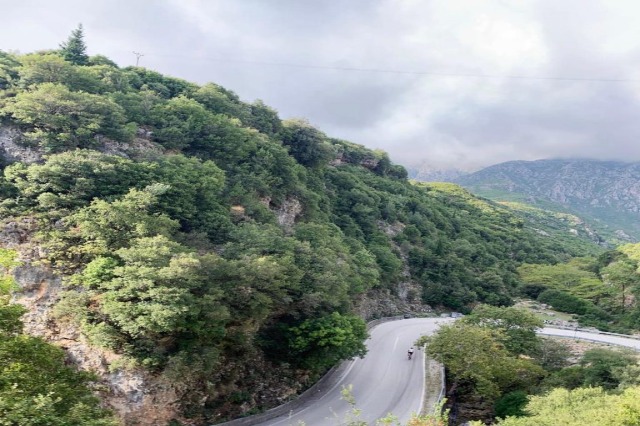
With gorgeous mountains, bucolic beaches, amazing food and medieval villages—minus the crowds of France or Italy—this unsung Balkan nation merits a spot on your travel to-do list.
Once a year, a pal and I plan a bike trip—a gambit that both scratches our itch for cycling adventure and lets us explore a new corner of the globe at ground level. Committed bon vivants, we’ve managed to hit some of the usual suspects like France and Spain, and some less-usual ones, like Ethiopia. Still, when my friend suggested this year’s destination—Albania—my eyebrows shot up.
After exploring Albania, I discovered that, like Italy and France, this small Mediterranean country boasts towering alpine mountains, a pristine azure coastline, a rich culinary culture, ancient history, and medieval villages.
Unsurprisingly, this former Ottoman province is making waves among discerning travelers—initially Europeans and now a growing number of Americans.
Albania joined NATO in 2009 and has since become a candidate for European Union membership. A new international airport, several modern hotels, and a luxury island resort planned by Jared Kushner, Donald Trump’s son-in-law, are set to open next year.
Yet, three decades after the fall of a repressive communist regime, this Balkan nation still feels undiscovered.
When my friend and I arrived in the capital, Tirana, in late September, the alpine air was still warm.
To navigate our trip, we hired a local cycling guide—an African-American expat who, seeking escape from U.S. politics and racism, had relocated to Albania as a digital nomad three years earlier.
During a five-day journey through the coastal towns of Vlorë, Himarë, Sarandë, and Ksamil, as well as the stone city of Gjirokastër, we cycled winding mountain roads lined with pine and fir trees.
At various points, breathtaking views of the Ionian and Adriatic Seas reminded us of the U.S. Pacific Coast and Italy’s Amalfi Coast.
Along the way, we enjoyed ‘byrek’, a cheese-filled pastry similar to Greece’s spanakopita. Our meals also included fresh seafood, pasta, and pizza—reflecting Albania’s close cultural ties to Italy, its neighbor across the Adriatic.
Throughout the country, a lavish dinner with wine cost less than $20, while four-star hotel accommodations were under $100.
On a rainy day, we visited the strategically important Porto Palermo Castle, built by the legendary 19th-century Albanian ruler Ali Pasha in a stunning bay to solidify his control over the region.
This impressive fortress, which served as a Soviet submarine base during Albania’s communist era, was not on the same grand scale as Carcassonne in southern France.
In the coastal town of Vlorë, where Albania declared independence in 1912, we were the only visitors at the National Independence Museum, housed in a modest building once home to the first government.
Surrounded by images of Albania’s founding fathers, many sporting mustaches and some donning flat-topped caps, a local guide walked us through the area’s history—all included in the $3 entry fee.
We encountered more visitors in Gjirokastër, a UNESCO World Heritage mountain town dramatically crowned by a Byzantine-era castle.
Tourists wandered its cobblestone streets, which exude old-world charm akin to cities like Siena or Bruges.
At its heart lies not a cathedral but a tall minaret of the Great Mosque, nestled amid a colorful bazaar.
The famed Gjirokastër Castle was quieter, likely because the trek to its summit must be made on foot.
However, the journey was worthwhile, especially for the fascinating museum inside, which recounts Albania’s vibrant military history.
Artifacts include a 1950s U.S. Air Force fighter jet that Albania claims to have captured during an incursion.
In the outdoor courtyard of “Hotel Seaside” in Vlorë, we had a conversation with the friendly owner, Agron Agalliu.
The warm hospitality Albanians are known for shone through as he served us glasses of homemade ‘raki’ and explained in detail how the traditional Albanian drink is made.
In Tirana, we met Harel Kopelman, an Israeli-American resident who co-founded a cultural center called “Nata Shqiptare” in one of the capital’s ubiquitous café-bars.
“America is well-known in Albania, partly because of President Wilson’s advocacy for Albania’s independence after World War I and President Clinton’s intervention in the Kosovo War, which is populated by ethnic Albanians,” he said.
“Albania is like the 51st state,” he added.
“People here love Americans. Speaking for myself, I can now say the feeling is entirely mutual,” he said.
Getting There
Although there are currently no nonstop flights from the U.S. to Albania, Tirana is accessible via many major European cities, including London, Paris, and Rome.
Planning a trip to Albania’s Riviera? Book a flight to Corfu, Greece, and take a one-hour ferry to Sarandë.
Accommodation
In Tirana’s embassy-filled Blloku district, the “Xheko Imperial Luxury Hotel & SPA” features a rooftop bar and restaurant with panoramic views of the city and surrounding mountains (from around $300).
In Vlorë, the seaside “Priam Hotel Luxury Resort” is an elegant option (from $250, with summer rates reaching $700).
Dining
In Tirana, “Sofra e Ariut” serves delicious traditional Albanian fare in a cozy wooden house set in a lush park.
Prefer something more modern? “Salt Tirana” offers a diverse menu focusing on seafood, sushi, and more.
Të ngjashme




Latest News










Most read










 RTI