
 English
 Français
  Deutsch
 Italiano
 Turkish
 Greek
Greek Serbian
Themistokli Gërmenji, a renowned Albanian patriot and warrior




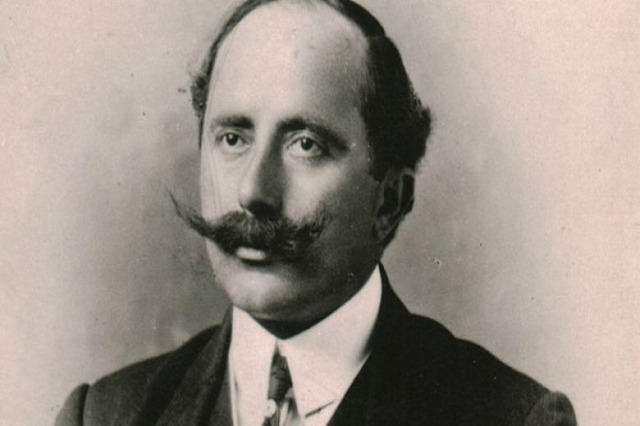
On November 9, it is commemorated the 101st anniversary of the passing of Themistokli Gërmenji, celebrated as one of Albania’s greatest patriots and a prominent figure in the history of the city of Korça. Often referred to by numerous epithets highlighting its beauty, culture, and rich history, Korça stands as a testament to the legacy left by individuals like Gërmenji.
As one of the most dedicated patriots of the national renaissance, he employed every available means in the relentless fight for the freedom of Albania.
Born in Korçë in January 1871 to a family with roots in the village of Gërmenj, Themistokli Gërmenji’s father was the founder of the ‘Black Society for Salvation’ movement and was tragically killed in Thrace due to his activism. In 1892, Themistokli and his brother, Telemak, emigrated to Romania. In Romania, he worked as an apprentice and participated in trade. During this period, he became a member of the patriotic societies ‘Drita’ and ‘Knowledge,’ actively contributing to their patriotic endeavors.
After nine years, Themistokli and his brother returned to their homeland, settling in the center of the vilayet, Manastir. In early 1908, they established the ‘Liria’ hotel, housing a secret room with national press materials—books, newspapers, and magazines printed in the Albanian language from Sofia, Bucharest, Boston, and beyond. This space became a hub for Albanian youth studying in the city. Themistokli played a key role in organizing the Monastery Congress, hosted in his hotel. In April 1911, he traveled to Sofia, welcomed by Nikolë Ivanaj.
During the Balkan War, Themistokli Gërmenji, alongside Ismail Kemal bey Vlora, served as the sub-prefect in Skrapar. Following the arrival of Prince Vid, he assumed the role of chief of police in Korça until the Greek forces compelled him to seek refuge in Bulgaria. After the tragic murder of his brother, Telemachus, Themistokli took on the responsibility of raising his nephew, Vasili. In the fall of 1916, he found himself in Pogradec, collaborating with the Bulgarian authorities and the Austro-Hungarian counter-intelligence service. Recognizing the Bulgarian intentions and witnessing clashes in the province of Korça, he proposed to the French the establishment of an Albanian administration. On December 8, 1916, leading a group of two to three hundred people, he reentered Korça, liberating it from Greek influence with the support of the French presence. The announcement of the formation of the Albanian Republic of Korça followed on December 10, endorsed by Henri Deskuen, the commander of the French garrison in the city.
Themistokli was appointed prefect, but after being ensnared in intrigues, he was either invited or arrested and subsequently sent to Thessaloniki, where he faced a military trial in October 1917, seemingly with his awareness. M. Saraj, exercising the rights of the president of the Republic, played a role in this process. Themistokli Gërmenji stands among the Albanian patriots who ardently fought for the independence of Albania, wielding both a rifle and a pen. Renowned as one of the foremost patriots in Korca, Opar, Gora, and its surrounding provinces, he achieved notable successes in battles within Opar and Gora. Feim Zacellari, one of Themistoklis’ most trusted allies, held a dominant position in the Gora region.
Found guilty by a military court and accused of contacts with Austro-Bulgarian authorities in Pogradec before the agreement with the French, Themistokli Gërmenji was executed by a French platoon on November 9, 1917.
/m.ll/
Të ngjashme
Latest News
Most read






 RTI
RTI