
 English
 Français
 Deutsch
 Italiano
 Turkish
 Greek
 Serbian
Tirana: A City of Cultural Transformation and Modern Charm




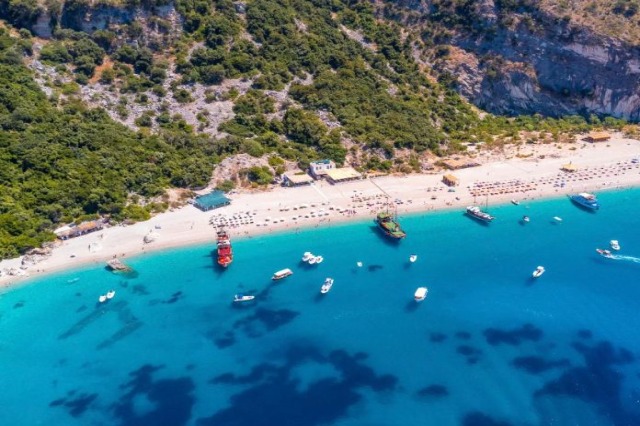
Avoid Overcrowded Destinations and Discover Serene Yet Sensational Holiday Spots for an Unforgettable Escape This Year, Writes Daniel Stables in the British Daily The Independent
“Hell is other people,” wrote Jean-Paul Sartre, a leading figure in 20th-century French philosophy and Marxism. Perhaps Sartre might have been less of a misanthrope had he spent less time in Paris, Europe’s most densely populated capital, and ventured instead to the quieter corners of his country, such as Camargue, the coastal region in southern France, or Occitania, the historical region of Southern Europe.
Today, mass tourism has become an issue even in the remotest parts of the world—places where human footprints were unheard of a century or two ago, let alone in France. Antarctica is now crowded with cruise ships, and traffic jams frequently occur at the summit of Mount Everest.
This phenomenon is not only disastrous for the environment but also a guaranteed way to ruin a holiday.
Here, we suggest a selection of lesser-visited destinations across the globe, each as captivating as their more renowned counterparts. These include Albania, Oman, Sulawesi in Indonesia, and Zimbabwe.
Albania
Soaring mountains, stunning beaches, and islands glistening in the Ionian Sea—Greece is undoubtedly beautiful in spring, but its Balkan neighbor, Albania, promises all these treasures with far fewer visitors and a greater diversity of natural landscapes compressed into a smaller territory.
The Theth National Park, located in the country’s north, offers superb hiking opportunities and breathtaking sights such as the Blue Eye, a karst spring of crystal-clear blue waters. Nearby, the Accursed Mountains (Bjeshkët e Nemuna) form part of the Dinaric Alps. With their dramatic, jagged peaks encircling verdant glacial valleys—where wildflowers bloom in spring—this region is unquestionably worth visiting before it gains widespread popularity and becomes one of Europe’s hottest hiking destinations.
Albania’s vibrant capital, Tirana, radiates the spirit of a city making up for lost time. Its eclectic architecture reflects a complex cultural history, shaped by fascist and communist dictatorships and its gradual opening to the wider world since the 1990s.
Noteworthy landmarks include the Pyramid of Tirana, initially built as a museum dedicated to the dictator Enver Hoxha; the Grand Mosque of Namazgja, the largest mosque in the Balkans; and the House of Leaves, a museum dedicated to espionage and the surveillance activities of the communist secret police.
However, Tirana truly comes alive through its contemporary cultural scene.
The Bunk’Art Museum, a symbol of reinvention, is housed in a repurposed Cold War-era bunker and showcases modern art. Meanwhile, Blloku, once exclusively frequented by the communist elite, has undergone a remarkable transformation into a trendy neighborhood filled with stylish restaurants and bars.
/a.c/
Të ngjashme



Latest News










Most read










 RTI