
 English
 Français
 Deutsch
 Italiano
 Turkish
 Greek
 Serbian
Tirana Opera House stages Cavalleria Rusticana of Mascagni




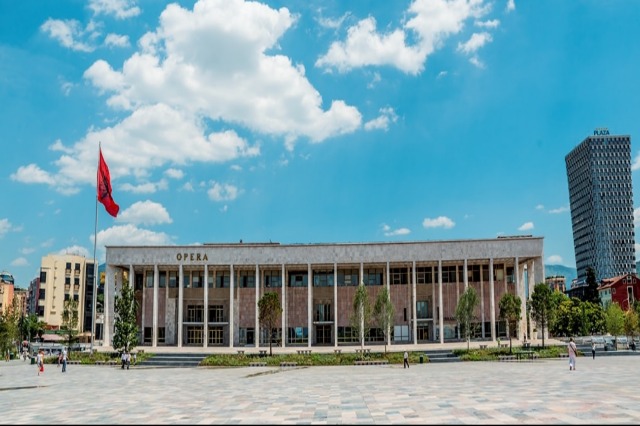
On September the 30th and Octber the 1st and the 2nd, Tirana National Opera House stages Cavalleria Rusticana by Pietro Mascagni, with the libretto of Giovanni Targioni-Tozzetti and Guido Menasci.
Opera Director is Nikolin Gurakuqi, Grand Master, while Vakhtang Gabidzashvili is the conductor. Scenography is set by Renold Sula, Choir Conductor is Dritan Lumshi, while concert masters are Etrita Ibrahimi and Thanas Paskali.
News from the Opera House say that the direction for the staging of this opera will not rely on a traditional concept that places the event in Sicily and in the time that the author notes, nor on an ultra-modern concept with clothing of the day and led-wall screens. The direction would place the work outside the time and space conceived by the author, with a general concept without geographical time and place of action, but with the time and place of action of the religious calendar (Easter).
The event will not be located in Sicily, but somewhere unspecified, while the day of Easter as a holiday of the religious calendar generalizes the place and time of the action, when elements of the Easter ritual become hyperbolized, scenography elements such as the cross with the crucified Jesus, the statue of the Madonna, rosaries, and Easter eggs. So through the symbolism raised in the scenography vision, the event has neither time nor space, and thus we get a setting with a generalizing message where the individual is a victim of the rites of the environment where he lives and where his blindness is based on provincial ignorance dominated by religious rituals and civil community, because we have two types of civil and religious rituals in action. First is the civil ritual of returning from daily work and the ritual of Easter with pilgrimage and prayer to close it with the civil ritual of the Summer Fest after leaving the Easter mass.
Director’s message is choice of a generalizing symbolist setting, in order convey the idea that the provincial revenge of the blind individual is more powerful than the Christian mercy and wisdom that preaches forgiveness and prayer, and commits the crime with full consciousness through the craft theater, crime of passion. This message is achieved only through a deep and tough artisanal theatrical play, embroidered with equal acting detail for all the characters.
Singers performing are Concetta Pepere, Shpresa Beka (Santuzza), Denis Skura , Armaldo Kllogjeri (Turiddu), Armando Likaj, Ylber Gjini, Solen Alla (Alfio), Ina Gaqi (Lucia, mother of Turiddu) and Dorina Selimaj (wife of Turiddu).
/a.p./
Të ngjashme

Latest News

Most read










 RTI