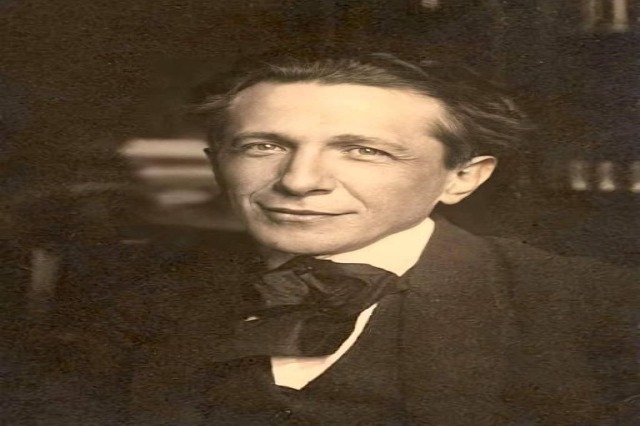
Today, the Center for Arbëresh Studies and Publications commemorated the 145th anniversary of the birth of the esteemed Croatian historian and politician, Milan Šufflay, a founding figure in Albanology.
Born on November 9, 1879, in Lepoglava, Croatia, Šufflay was instrumental in establishing Albanology as a field of study and is credited with writing Croatia’s first science fiction novel. His scholarly work on the Albanian world includes objective analyses and documented studies on Skanderbeg. Among his most notable publications are The Borders of Albania in the Middle Ages, Medieval Albania, and The Biology of Albanian Tribes, which remain critical contributions to historical studies.
Another key literary work, Konstantin Balsha, is one of the earliest historical novels themed around Albania. Šufflay’s interest in Albania and the Albanian people can be traced back to the beginning of his academic career, where, while researching archives in Dalmatia for Tadija Smičiklas’s Codex diplomaticus, he discovered a wealth of unpublished medieval Albanian materials. This uncharted period sparked a profound interest in the young scholar, becoming a lifelong academic pursuit and, ultimately, leading to his tragic demise.
Persecuted by the Kingdom of Yugoslavia, Šufflay was assassinated at his doorstep in Zagreb on February 19, 1931. The international outcry was significant, with publications like Tribuna (Rome), Berliner Tagblatt, New York Times, Frankfurter Zeitung, Arbënia, and Vullneti i Popullit (Tirana) denouncing the murder.
Prominent figures such as Albert Einstein, Heinrich Mann, Dr. Josef Bajza, Dr. Max Hildebert Boehm, Dr. Karl Fritzler, Dr. Zenon Kuziela, Dr. Martin Spahn, Dr. Branimir Jelić, Josip Milković, Mid’hat Frashëri, and Faik Konica, along with organizations like the Ligue Internationale des Droits de l’Homme and Federation Universitaire Internationale, issued a memorandum in response to the tragedy, reflecting Šufflay’s profound influence and the scholarly community’s solidarity.
/a.c/

 English
 Français
  Deutsch
 Italiano
 Turkish
 Greek
Greek Serbian












 RTI
RTI