
 English
 Français
 Deutsch
 Italiano
 Turkish
 Greek
 Serbian
US State Department evaluates Albania for the fight against terrorism




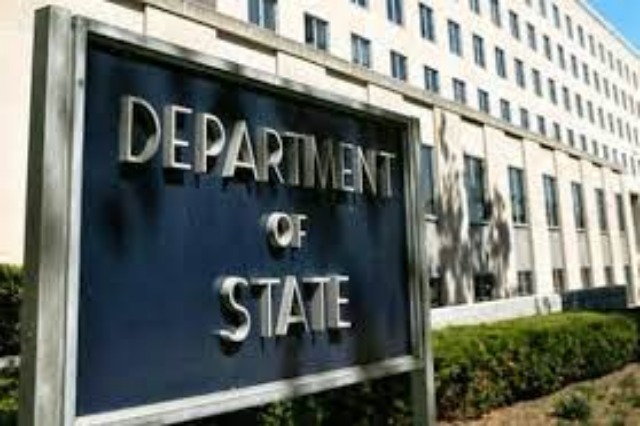
In its annual report, the US State Department evaluated Albania’s efforts in the fight against terrorism.
“Albania has adopted a national anti-terrorism strategy,” the report emphasizes.
“Albania continued its strong support to international counter-terrorism efforts in 2022 by repatriating 13 of its nationals from al-Hol displaced persons camp in Syria and engaging in their reintegration and rehabilitation throughout the year.
The country has adopted a national strategy for counter-terrorism and counter-violent extremism (CVE) until 2025 and is revising the strategy. The threat of terrorism in Albania consists of the efforts of foreign terrorist organizations to radicalize Albanian youth into violence.
In 2022, there were no terrorist incidents reported in Albania.
Legislation, law enforcement and border security:
In Albania it is illegal to join a terrorist organization, provide and participate in terrorism-related training, provide material support (including funding) to a terrorist organization, and participate in a foreign military.
The State Police Counter Terrorism Unit (CTU) has worked closely with US agencies to align the Albanian government’s CT efforts with US expertise and resources, ensuring that the Albanian government develops focused CT capabilities.
CTU received extensive training and equipment throughout the year from the State Department’s Counterterrorism Assistance program.
The Special Prosecutor’s Office for Organized Crime and Corruption has accused two people of incitement and propaganda in favor of the terrorist organization ISIS, based on the investigations carried out by the Anti-Terrorism Unit of the Albanian State Police. In December, the Special Court for Organized Crime and Corruption sentenced an Iranian national to 15 years in prison for preparing terrorist acts.
On May 28, Albania successfully repatriated 13 citizens from displaced persons camps in Syria. The Albanian government’s CVE Center led the rehabilitation and reintegration of these individuals and coordinated the efforts of various ministries, international donors, members of civil society and non-governmental organizations to support these efforts. This was the second repatriation in a 12-month period carried out by the Albanian authorities, for a total of 38 repatriated women and children.
Corruption and obstacles to information sharing between government agencies, insufficient coordination within agencies, and a weak judicial system continued to hamper Albania’s law enforcement efforts at all levels, including those related to the fight against terrorism.
The implementation of deep reforms in the justice sector continued. Verification of Albania’s 800 judges and prosecutors for corruption, competence and links to organized crime was 75 percent complete at the end of the year.
Albania is committed to increasing its border security and control efforts to stop the travel of terrorists, with the support of US experts and programs. Albanian law enforcement services cooperate extensively with INTERPOL and other international law enforcement bodies.
The country continues to work on the implementation of United Nations Security Council resolution 2396 on Advanced Passenger Information and Passenger Name Records and established a Passenger Information Unit with the support of the United States. Albania supports a port security surveillance system to implement the requirements under the International Maritime Organization’s International Ship and Port Security Code.
Against the financing of terrorism:
Albania is a member of MONEYVAL (Committee of Experts for the Evaluation of Measures Against Money Laundering and the Financing of Terrorism). The General Directorate for the Prevention of Money Laundering is a member of the Egmont Group. Albania remained on the FATF “gray list” in 2022.
In 2022, the FATF reported that Albania took steps to improve its Anti-Money Laundering and Anti-Terrorism Financing regime, including finalizing real estate registration, completing a long-term project to reduce the informal economy, increasing focus and the efforts of law enforcement authorities and the prosecution for the implementation of the entire range of seizure and confiscation measures, the adoption of an adequate legal framework for violations of the obligations of registration of companies and non-profit organizations and the implementation of proportional and convincing sanctions against entities that do not have declared their beneficial owners in the register within the deadline. In its May follow-up report, Albania noted progress in addressing identified technical compliance gaps.
Against violent extremism:
The Government of Albania has a national CVE strategy until 2025 and has drafted a new one. The National CVE Center coordinates and manages CVE programming among international donors and seeks to ensure that all ministries collaborate effectively and avoid duplication of effort. The National CVE Center coordinated and managed the reception, rehabilitation and reintegration of all returned women and children. The National CVE Center has been sought out for advice from other countries because of its successes with reintegration.
The Embassy in Tirana supports CVE efforts with a wide range of assistance programs and diplomatic engagements, including local community groups that identify and mitigate the factors underlying violent extremism. The Global Community Engagement and Resilience Fund, in close coordination with the National CVE Center, funds three organizations working on CVE issues: the Institute for Democracy and Mediation, the Women’s Advice Line and Terre des Hommes.
The State Department oversaw the implementation of a sixth CVE grant to the Albanian Muslim Community, which involved engaging Islamic clergy with at-risk youth, their parents, and civic leaders to steer youth away from radicalization to violence, as well as informing them about democratic principles, human rights, civic commitment and tolerance.
International and regional cooperation:
Albania is a member of the Adriatic Council, the Council of Europe, NATO, the Organization of Islamic Cooperation, the OSCE, the Regional Cooperation Council for Southeast Europe, the United Nations and the International Center of Excellence for Countering Violent Extremism (Hedayah) .
In 2022, she continued to serve as a non-permanent member of the UN Security Council. Albanian criminal justice officials regularly participated in various regional associations, conferences and other exchanges of information against terrorism.
/a.p./
Të ngjashme

Latest News
Most read










 RTI