
 English
 Français
  Deutsch
 Italiano
 Turkish
 Greek
Greek Serbian
Varhelyi: The war brought Europe closer to the Balkans; Albania can now continue on its own




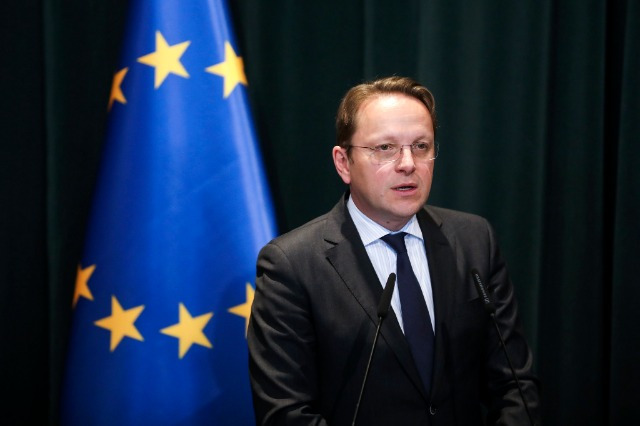
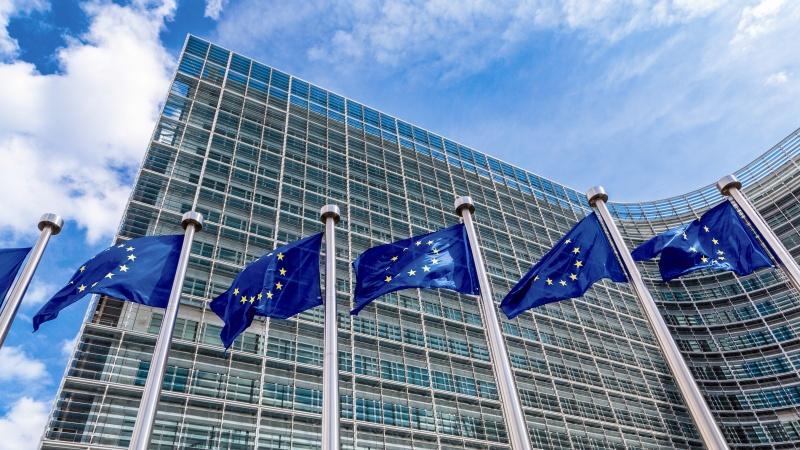
Russia’s war on Ukraine has brought back the debate around the EU enlargement process and shown the need to speed up the procedures, essentially banned by the previous Commission, Enlargement Commissioner Olivér Várhelyi told EURACTIV in an exclusive interview.
The comments came after EU leaders in June granted candidate status to Ukraine and Moldova as a signal of solidarity in response to Russian aggression, and member states in July gave the green light to start long-delayed membership talks with North Macedonia and Albania.
“Perhaps the only positive impact of Russia’s war in Ukraine is that it clarified the discussion about enlargement as well as the absorption capacity of the EU,” said Várhelyi.
“We Europeans now not only understand, but we are ready to realize this, that Europe will not enjoy security, stability and prosperity without the Western Balkans being fully integrated,” he said.
In recent years, there has been little appetite for enlargement within the EU, and some member states have sought EU reforms before accepting any new members.
“What I expect now, and what will be a big responsibility for the European Commission, is that there is now a clear political will, which was not always visible.”
The Hungarian commissioner said that Europe lacks a proper political platform to engage with the candidate countries “but also with its neighbors, where Europe is able to talk to its allies and partners and exchange and engage in a very more intense”.
In the past, when Hungary or Poland were candidate countries, they were invited to the second day of EU summits, which is “very much in the memory of our Western Balkan friends”.
“They feel involved and their involvement would also mean they know a lot more about our processes, which will create a lot more ownership to engage quickly in many areas,” he added.
After Skopje resolved a long-running dispute with neighboring EU member Bulgaria, Albania is expected to start accession negotiations immediately. As for North Macedonia, it will first have to amend its constitution to include Bulgarians among the other nation-building nations listed in it, for which it does not have the necessary consensus in parliament.
This prompted the nationalist opposition to organize days of protests in Skopje, which Várhelyi said crossed basic democratic red lines.
Asked if he saw any risk of further obstacles down the line, Várhelyi said the goal has been to “create clear, fair and transparent criteria that are also manageable and that can really change the negativism from both sides”.
At the same time, he noted that “Albania has shown real solidarity with North Macedonia and the maturity to understand that our member countries wanted both countries to move forward”, but said that Albania can now proceed on its own.
“The whole expansion process is based on merit and now the race is on, whoever gives first should have the right to join first,” explained Várhelyi.
/Klara Ruci/



 RTI
RTI