
 English
 Français
 Deutsch
 Italiano
 Turkish
 Greek
 Serbian
Vjosa National Park, Kumbaro: We will complete the documentation by the end of 2022




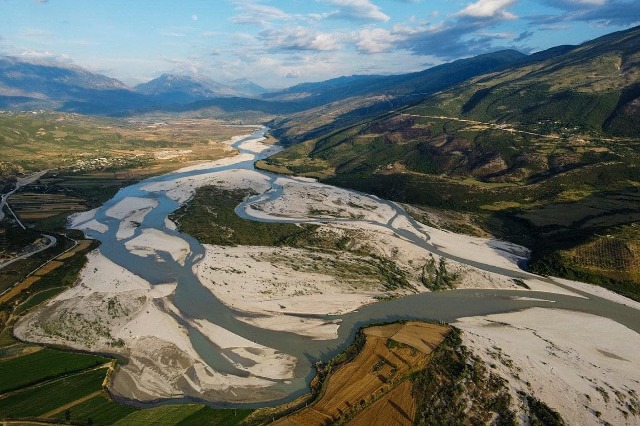
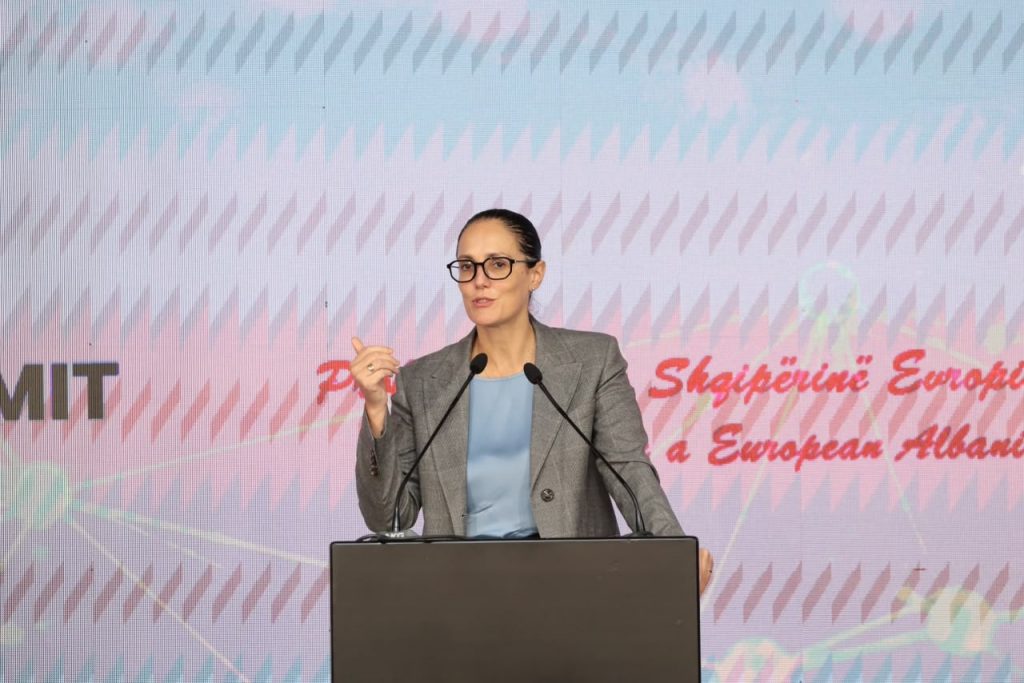
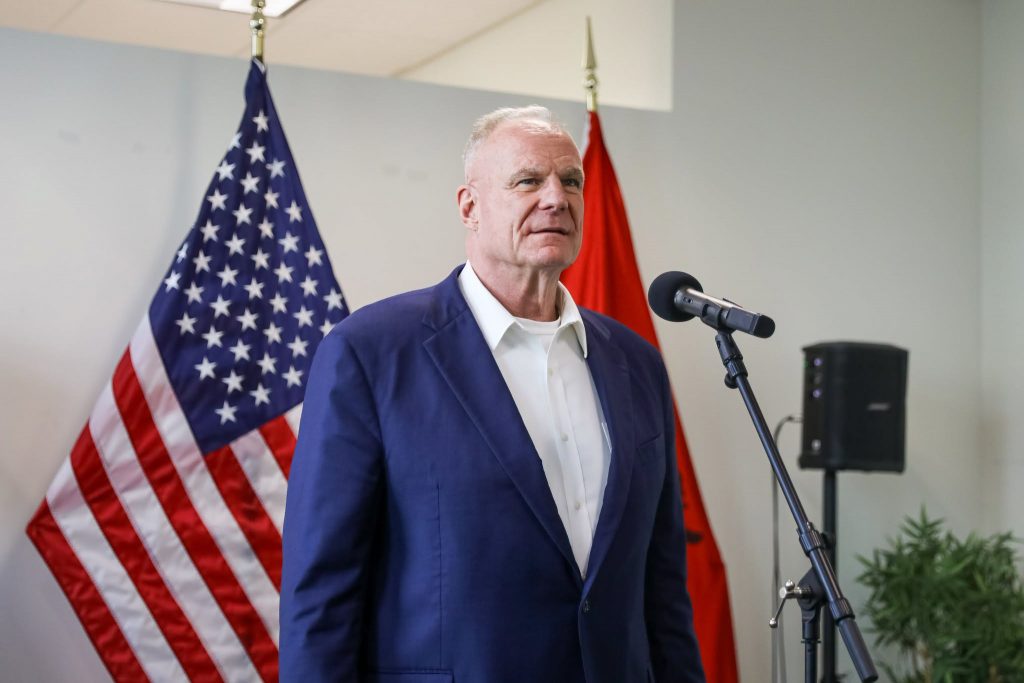
Albanian Minister of Tourism and Environment, Mirela Kumbaro, and the Executive Director of Patagonia, Ryan Gellert, within the framework of 100 days from the start of the work for the proclamation of Vjosa National Park, have come out with a joint statement.
In a post on social networks, Kumbaro said that “this weekend, the team of experts will travel to Vjosa River in a study visit, and then work will continue to draft a detailed master plan. The goal is to complete the documentation work by the end of 2022 and immediately after that to proceed with the official announcement of the first stage of “Wild Vjosa River National Park”.
Following is the joint statement of the Minister of Tourism and Environment, Mirela Kumbaro, and the Executive Director of Patagonia, Ryan Gellert:
100 DAYS OF COOPERATION TOWARDS THE VISION FOR THE WILD VJOSA RIVER NATIONAL PARK
100 days ago, together we made a pledge to nature. As leaders of two different institutions, the Ministry of Tourism and Environment in Albania and the American company Patagonia – but at the same time as two people who share a passion for nature, in the presence of Government officials, representatives of non-governmental organizations, local and international journalists, at the National Theater of Opera and Ballet in Tirana, we signed a Memorandum of Understanding declaring our commitment to work together for the declaration of the Wild Vjosa River National Park.
On the day of signing the Memorandum, we were aware of the complex work that awaited us. As an immediate step after the ceremony, we organized the introductory meeting with our team – the experts responsible for taking any action for the permanent protection of Vjosa and its free-flowing tributaries, at the level of IUCN Category II.
The team consists of over 30 experts, from Albania and around the world, specialized in various fields such as eco-tourism, interest groups, park planning and management, sustainable financing, environmental legislation, communication and promotion, as well as impact assessment in the environment, led by local and international coordinators. As a working group, we agree on how extraordinary Vjosa River and its tributaries are, while we appreciate the danger this fragile and unique ecosystem may be under.
Genuine and rigorous collaboration between parties is rare, especially at this level. However, our aim is for the Vjosa River National Park to create a model for other conservation and restoration initiatives to protect important natural areas around the world, in a broad involvement of government, civil society and private companies. Patagonia has a special history of supporting local communities and civil society. And when these values are combined with the in-depth knowledge, passion and expertise of the Ministry as well as the NGO network, change becomes possible.
In the first 100 days of the project, in partnership with Patagonia, the Ministry of Tourism and Environment, the National Agency of Protected Areas and a network of NGOs, the working group has taken clear steps to achieve the common objective of as determining the boundaries and areas of the future national park, development of a concept for the management structure of the national park in the first year, calculating the human resources, as well as the materials needed for the management of the national park, creation of a concept for eco-tourism within the Vjosa watershed, building options for sustainable financing of the operation and management of the national park, and supporting the process through stakeholder engagement and efforts to ensure that at every stage, the project is transparent to the public.
What do we have ahead? In the following days, the team of experts will undertake a joint study trip along the Vjosa River and its tributaries. Through a five-day program, all the main components of the river system – including tributaries, protected areas and natural monuments – will be examined. The experts will discuss eco-tourism development methods and will meet daily with stakeholders – local communities, local government, interest groups and NGOs conducting discussion sessions while staying in hotels and guesthouses within the proposed boundaries. of the national park.
Immediately after the trip, the preparation of a detailed master plan will begin and then the national park will be declared through a staged process, continuously increasing the number of tributaries of the Vjosa river involved – until all of its free-flowing tributaries are included – and expanding the scope of protection to include not only publicly owned territory, but also non-public ones. Our goal is to complete the documentation work by the end of 2022, and immediately after that proceed with the official announcement of the first phase of the Wild Vjosa River National Park, in partnership, with local communities and local government.
As we look at the tasks ahead, today 100 days later we know that work on this extraordinary, transformative project takes time – there are no shortcuts to fully protecting the natural ecosystem. But the inspiration we get from the communities that call this unique river system “home” gives us energy and focus for the rigorous work ahead. We look forward to the nearest day, when we can stand together again, by Vjosa, knowing that it is protected forever.
/a.p./
Të ngjashme
Latest News

Most read










 RTI