
 English
 Français
 Deutsch
 Italiano
 Turkish
 Greek
 Serbian
Xhubleta, a proof of national identity; Young people in Malësi e Madhe exhibit traditional clothing




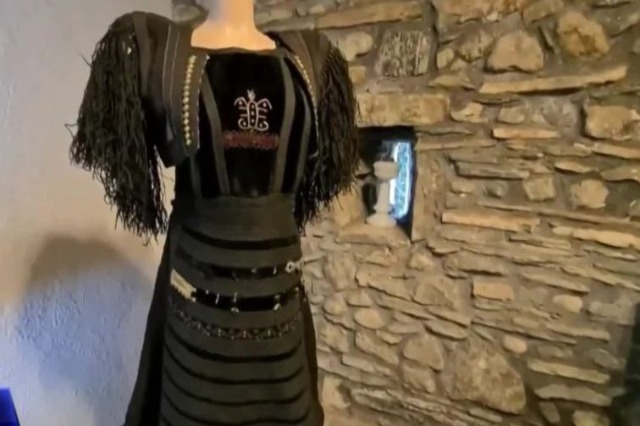
In the churchyard of the village of Bajza, in Malësi e Madhe, a group of young people are exhibiting the traditional costumes of the area, where the xhubleta stands out.The earliest Albanian xhubleta date back to the 17th century, mostly in the northern region, Kelmend, Tropoja, the highlands bordering Montenegro, and in Metohija, (Rafshi i Dukagjinit) in Kosovo.
Due to its values and the risk of extinction, about two years ago in Albania, work kicked off in on preparing the dossier for UNESCO, as an endangered heritage.
The young woman Ema Shabaj says that she has learned from her grandmother all the elements that make up the xhubleta and that she feels proud of this dress.
“This xhubleta belongs to my grandmother. She has been working on it for 50 years and I am very honored to wear it and inherit its tradition. It is an ancient xhubleta, it is handmade and it was made at that time with many sacrifices. The embroidering is made with silver thread,” she says.
Coming from the depths of the centuries, the xhubleta, until the second half of the last century, was an everyday dress of the highland women, but with the establishment of agricultural cooperatives it turned into a ceremonial dress. The girls express concern that the xhubletas are in danger of disappearing over the years.
Concern about the fate of the xhubleta has pushed Rita Shkurtaj to form the association “Xhubleta of the Albanian Alps”, an association that aims to protect and pass on to generations this spiritual and material wealth of the nation.
Teacher Florina Laçaj says that, despite the fact that for almost 70 years the xhubleta has been out of daily use, it continues to be part of the spiritual heritage of highland women and girls.
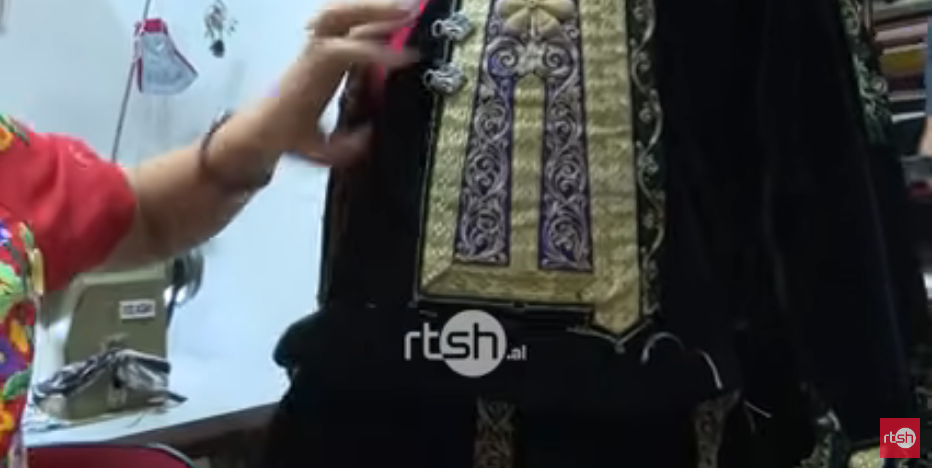
Describing the greatness of the xhubleta, the head of the association “Xhubleta of the Albanian Alps”, Rita Shkurtaj, says that to build a house in the highlands takes about 6 months, while to create a xhubleta, it takes a little more than 9 months. She adds that in recent years there has been a growing interest of girls and women to return to the xhubleta.
Emerging from the daily use of highland women, the xhubleta continues to be endangered along with production techniques.
Therefore, the specialist Mlika says that it is important to preserve the knowledge of the xhubleta, which is made possible by its inclusion in UNESCO, as an asset in danger, initiated by the Ministry of Culture, supported by the Albanian-American Development Fund.
/Klara Ruci/
Të ngjashme



Latest News






Most read










 RTI