
 English
 Français
 Deutsch
 Italiano
 Turkish
 Greek
 Serbian
60th edition of the International Venice Biennale, Gonxhja: Artist Iva Lulashi will represent Albania




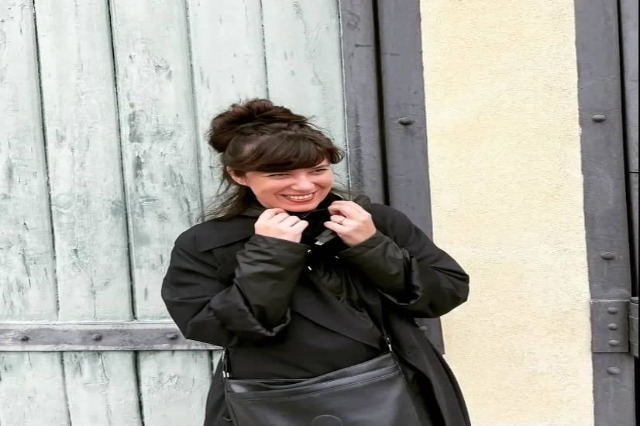
The artist Iva Lulashi will represent Albania in the 60th edition of the International Art Biennale in Venice. Minister Blendi Gonxhja shared the news through a post on social networks, where he added that the Ministry of Economy, Culture, and Innovation facilitated the “Love as a Glass of Water” project.
The Venice Biennale stands as one of the most significant artistic events on the international stage.
Albania’s representative, Iva Lulashi, is an artist known for navigating adventurous artistic terrain and has forged her career between Albania and Italy. The Lulashi project, featured in the Albanian pavilion, will be curated by the Italian critic Antonio Grulli. Born in Albania in 1988, Iva Lulashi graduated in Venice in 2016.
“Through her art, Iva Lulashi invites us to see love and instinct as a universal language, the primary force that connects man with the world. Let’s support our artist in this great journey on the international stage,” wrote Minister Gonxhja.
The overarching theme of this edition of the Venice Biennale, taking place from April 20 to November 24, is “Strangers everywhere” and is curated by Brazilian curator Adriano Pedrosa.
The subject matter to be explored in the Albanian pavilion is rooted in the “glass of water” theory, originating from the period before the Russian revolution and associated with the revolutionary feminist thinker Alexandra Kollontai (1872-1952). The theory revolves around the concept of the sexual revolution, viewing impulses as a basic human need to be fulfilled as effortlessly as drinking a glass of water. Despite its significant influence in Russian artistic and literary circles, these ideas began facing obstacles and persecution from the revolutionary political apparatus.
“Although the metaphor of the glass of water is related to the ease of drinking, we must not forget that water is a vital element, much like a girlfriend. It is absurd that topics such as love and sexual desire occupy a very small part in the art produced today, and they are never at the center of large or small activities, as if they were treated as taboos or deemed as trivial matters, not worthy of attention,” cited curator Antonio Grulli.
/m.ll/
Të ngjashme




Latest News







Most read










 RTI