
 English
 Français
 Deutsch
 Italiano
 Turkish
 Greek
 Serbian
“You are listening to Radio Tirana “/ Former building of Radio Tirana to be restored




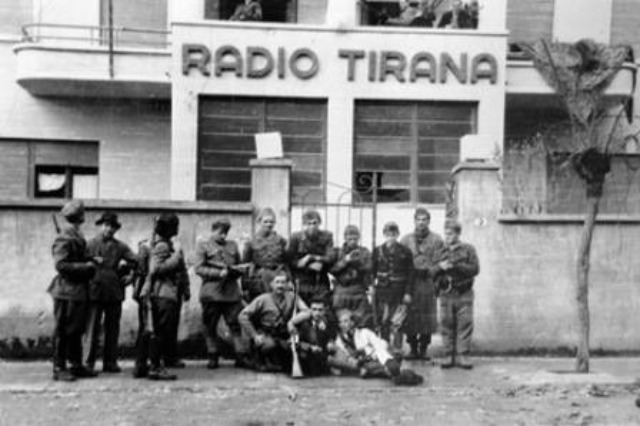
The former building of Radio Tirana will be restored. The news was made public by the Minister of Culture, Elva Margariti, through a post on her Facebook page. According to the minister, in its most recent meeting, the National Council of Material Cultural Heritage approved the project for the restoration of this object, a category II cultural monument.
Built between 1928-1930, the former building of Radio Tirana and then of the Institute of Popular Culture is one of the first modern villas in the city.
Currently, it presents numerous damages to the roof, facade, floor, doors, windows, internal and external elements.
“The interventions consist of restorations of the roof and floor, the facade, installation of new doors and windows, restoration of capitals, cleaning and painting of railings, completion of hydraulic and electrical systems, systemization of the outer courtyard, etc.”, Margariti writes.
History of Radio Tirana
“You are listening to Radio Tirana!” – That was the call from November 28, 1938 to this day, that emits the Albanian word for Albanians, reminding us that it is the first radio in the country that laid the foundations and built the history of radio in Albania.
Radio Tirana, for the first time in its history, started broadcasting on November 28, 1938, five months before the invasion of Albania by Italy. Initially, Radio Tirana had its residence in one of the premises of the then City Hall, but from the end of 1939, it was transferred to a new building on Kont Urani street.
The news about the opening of a radio station in the Albanian capital, where Albanian music could be broadcast, was received with great enthusiasm by the people. In King Zog’s Tirana, the idea of a radio was among the great chances of spreading an emancipatory spirit for the backward Albanian society.
Evidence shows that in the inauguration ceremony of Radio Tirana, King Zog and Queen Geraldine themselves participated, who also gave the relevant speeches. From this radio, patriotic and popular Albanian music was initially broadcast and mainly for the music, gramophone records donated by the citizens were used.
From the end of 1939, Radio Tirana was transferred as a building and starting from 1940, it started to publish a biweekly magazine, which was first called “Radioprogram”, then “Radiorevista Tirana” and “Albanian Vatra “,(Albanian Hearth).
On November 27, 1944, Radio Tirana resumed its tradition. The music performed by the artists present in the studio followed, accompanied by the Italian pianist Mario Etore and the Albanian Lola Gjoka. Every night was like a premiere. Artists coming and going, live emotions, loudspeakers placed in the most key points of the capital and crowds of people listening through them. Lyric singers who debuted after the war were Tefta Tashko Koço, Kristaq Antoniu, Marie Kraja, and many others. After that, programs started with patriotic songs, reports from the railways, from life in the city, the programs “Women’s Hour”, “Children’s Hour”, “Katundari Hour”, “Joyful Hour”, “Medical Advice”, etc. started. Since the first days after the war, Radio Tirana could broadcast news in foreign languages, continuing the experience started in April 1939.
In 1945, Radio Tirana started for the first time in its history, a series of sports broadcasts, where Anton Mazreku became its protagonist. In 1946, the dramatization of various parts began, with the participation of the best actors of the Albanian scene.
Later, a large orchestra was created, which was known as the “Radio and Cinematography Orchestra”, while in 1962, the first Albanian Light Music Festival, known as the “Radio Festival”, came to life, to continue a long tradition. In 1972, with the beginning of the liberalization of life in the country, it could introduce foreign music, such as “The Beatles”. Everything liberal that had begun to flourish was cut short.
Radio Tirana is a witness, but also a protagonist of Albanian history. It is its employees, all passionate, courageous and professional people, all in love with radio and its fascination, who today inspire the listeners of Radio Tirana, raising its name as the temple of culture and human emancipation.
/k.s/
Të ngjashme
Latest News

Most read










 RTI