
 English
 Français
 Deutsch
 Italiano
 Turkish
 Greek
 Serbian
El Nuevo Herald: Albania, emerging for foreign visitors as an unknown jewel of Europe




After decades of isolation and silence, this small Balkan country now offers new infrastructure, vibrant cities, and warm hospitality.
Our journey began in Tirana, the starting point of a 15-day tour through Albania’s culturally rich cities, writes Enrique Córdoba in an article published in the Spanish Magazine El Nuevo Herald.
Tirana: The Lively Capital
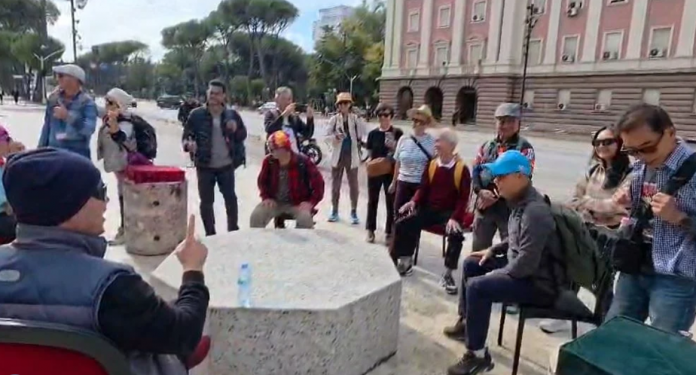
Tirana is a vibrant, colorful city full of life. Skanderbeg Square and the Blloku district show the contrast between past and present — from mosques and cathedrals being restored to lively bars, bookstores, and cafés where young people discuss Europe and the future.
At first glance, Tirana appears as a young capital, bright and full of energy, with seemingly endless traffic. A few steps further, you realize that behind this dynamism lies a heavy history that still breathes.
At the New Bazaar, the renovated old market, the fruit gleams like a manifesto: red pomegranates, purple figs, piles of olives. In a corner, a group of men play backgammon amid cigarette smoke and hearty laughter.
One of them greeted me in fluent Spanish — he had learned it while working in Valencia.
“Brother, there’s always room for tourists here,” he said, pulling up a chair. His name was Leka, and he spoke calmly. When he mentioned the years of Enver Hoxha, the tone of the conversation changed: it was not history — it was a vivid memory.
“You couldn’t travel, pray, or talk too much. The worst part wasn’t the concrete… it was the silence,” he said, touching his chest.
That “silence” is not a metaphor. Between 1944 and 1985, Albania lived under one of Europe’s most closed regimes — a Stalinist-style communism that turned fear into a system. Its symbols remain the bunkers: tens of thousands scattered along beaches, mountains, and roads — small domes of concrete still marking the landscape like scars.
Yet today’s Tirana looks forward. Skanderbeg Square — wide and almost theatrical — serves as the city’s heart: families, musicians, students gather there.
The National Museum displays the large mosaic on its façade like a postcard from the past. A few meters away, mosques and cathedrals have regained their place in a society where faiths coexist naturally.
The Blloku area shows the transition. Once home to the Communist Party elite and closed to the public, it is now filled with bars, cafés, and bookstores where young people talk about Europe, remote work, and the future.
The contrast itself has become a tourist attraction: walking through Blloku means seeing a city that has transformed its invisible walls into public life.
Tirana is an excellent starting point to taste Albanian products: byrek (with cheese or spinach), salads with white cheese, grilled lamb, and coffee — all staples of traditional cuisine. And if someone offers you raki, remember: it’s not just a drink; it’s a gesture of warm hospitality.
Kruja: The City of Identity
Kruja, the city of Albanian identity, rises above the Adriatic valley, where its castle and old bazaar tell stories of history and craftsmanship. A plate of lamb, cheese, warm bread, and honey conveys more than any museum narrative.
About forty minutes from Tirana lies the city of Kruja, whose history is tied to Albania’s national hero, Gjergj Kastrioti Skanderbeg — the leader who resisted the Ottoman Empire in the 15th century.
The castle of Kruja dominates the valley like an eagle’s nest. From above, you can see the Adriatic — even on clear days. Tirana appears far away. In the museum dedicated to Skanderbeg, the epic becomes tangible: maps, weapons, symbols.
The Old Bazaar reflects daily life — artisans carving double-headed eagles in wood, selling carpets, embroidery, and knives. In Kruja, you can also enjoy a traditional meal of lamb, cheese, warm bread, and honey.
From Mountain to Sea: Durrës
Durrës, the gateway to the Adriatic, showcases Roman and Venetian heritage, while its beaches and seaside boulevard offer a perfect mix of relaxation and history.
Located just thirty minutes from Tirana, Durrës serves as Albania’s main port. The salty air mixes with the smell of ferry fuel bound for Italy; cranes move slowly; the city hums like an open door. Beneath its modern coastal look, Durrës preserves an ancient past — once known as Dyrrachium, the starting point of the Via Egnatia, which connected the Adriatic to ancient Byzantium.
The Roman amphitheater, discovered in the 1960s, lies in the heart of the city with its steps, arches, and grass-covered arena where 20,000 spectators once gathered. Along the seaside boulevard, families stroll, restaurants serve grilled fish, and the sea seems to whisper of those who once passed here — Greeks, Romans, Venetians, Ottomans, and modern travelers.
Berat and Gjirokastra
Berat, the “city of a thousand windows,” and Gjirokastra, both UNESCO World Heritage sites, reveal harmony between culture, history, and daily life.
The road through olive-covered hills looks as if it were painted with patience. Berat, a World Heritage Site, reveals itself at a glance: white houses stacked on the hillside, dozens of windows overlooking the valley.
The Osum River divides neighborhoods of Muslim and Christian heritage, yet the present blends them in peaceful coexistence.
On the way to Berat Castle, you’ll see churches, Byzantine ruins, and cobblestone streets. Choose a terrace restaurant and enjoy traditional dishes: lamb, roasted peppers, thick yogurt, and local wine.
Further south lies Gjirokastra — another UNESCO city, carved into stone. Ottoman houses and steep cobbled streets create an enchanting atmosphere.
Here were born Ismail Kadare, Albania’s greatest writer, and Enver Hoxha, its former dictator — two opposing biographies from the same soil. A visit to Kadare’s House offers an intimate context: what it means to write in a country that once learned silence.
Cold War tunnels, built for a war that never came, complete the portrait of an era where fear was built in concrete.
The Ionian Sea: Where the Scene Changes
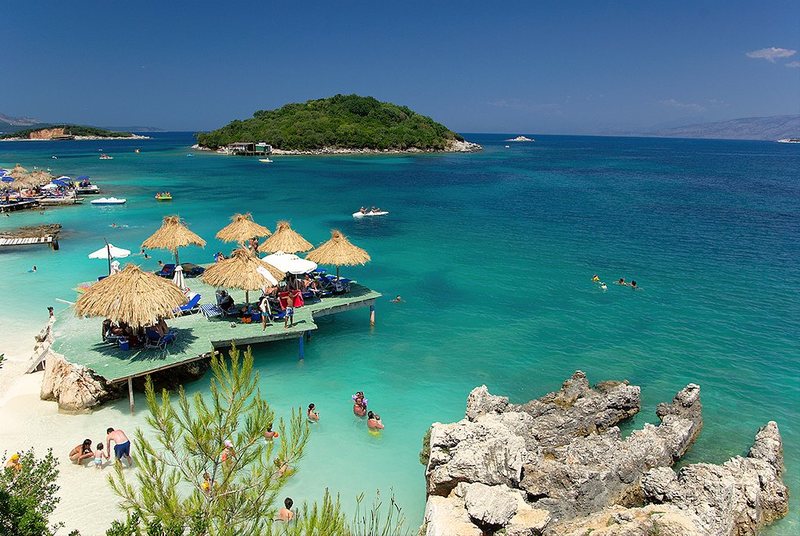
Saranda and Ksamil offer turquoise seas, small islands, and theatrical sunsets, turning Albania into a pure Mediterranean destination. The archaeological park of Butrint, also a UNESCO site, takes visitors through civilizations in a magically preserved landscape.
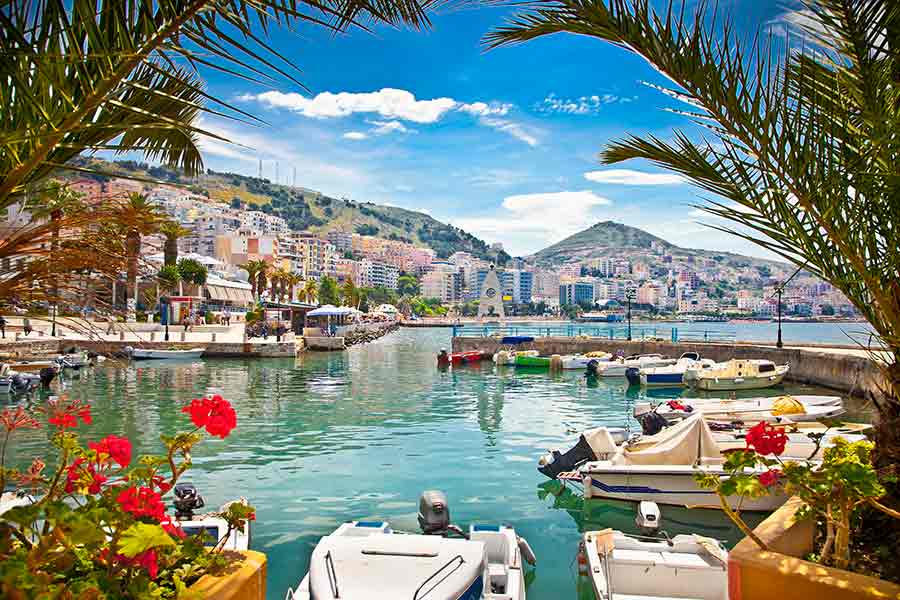
The road to Saranda and Ksamil reveals postcard-like views — crystal waters and gleaming coasts. Saranda buzzes with new hotels, cafés, terraces, and growing tourism. Ksamil, with its nearby islands and “theatrical light” at sunset, is where Albania becomes a true Mediterranean destination — swimming, rest, fresh fish, and chilled white wine.
Natural Park: Butrint
A UNESCO World Heritage and Archaeological Park, Butrint reveals a Hellenistic theater, Roman layers, Byzantine basilicas, and Venetian fortresses. Butrint is not just a site of ruins — it offers a journey through civilizations in a landscape of lagoon and forest, where silence feels carefully preserved.
Albania is a country where history remains visible — yet it doesn’t paralyze life.
Prices are more affordable than in neighboring countries, nature remains wild, and hospitality is sincere — making every visit unforgettable.
This country invites visitors to dream and to discover a story that has only just awakened.
Të ngjashme
Latest News

Most read










 RTI