
 English
 Français
 Deutsch
 Italiano
 Turkish
 Greek
 Serbian
World Bank Forecasts Albania’s Economy to Grow 3.4% in 2026 and 3.6% in 2027




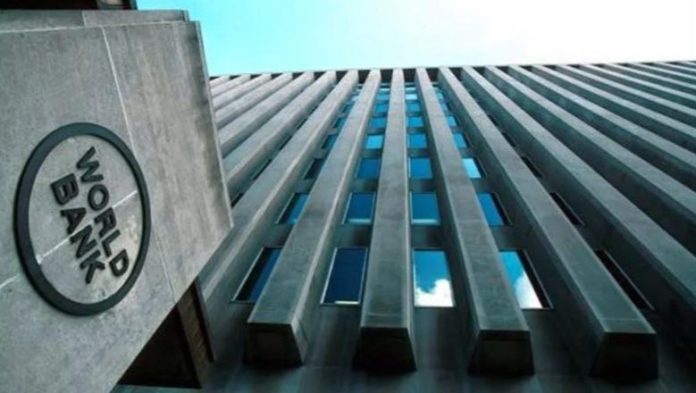
Albania’s economy is projected to grow by 3.4% in 2026 and 3.6% in 2027, according to the World Bank’s latest Western Balkans Regular Economic Report.
The report finds that economies across the region have remained resilient despite external shocks and continue to converge with the European Union. In Albania, stronger fiscal and external balances have helped bring public debt below 50% of gross domestic product (GDP).
However, the World Bank says Albania needs further reforms to sustain long-term growth. These should boost productivity, diversify exports, attract investment and address demographic pressures.
Domestic demand drives growth
Albania maintained steady economic growth in early 2026, supported by domestic demand, services and construction. Strong labour demand also pushed unemployment to a record low. Meanwhile, wages continued to rise and poverty declined further.
Credit growth remained strong, while the financial sector maintained its stability, supported by low levels of non-performing loans.
However, inflation gradually increased through August. Higher food and fuel prices, rising rents driven by strong tourism demand and significant wage increases all contributed to price pressures.
Fiscal and external balances improve
Albania’s fiscal position continued to strengthen. Strong budget revenues helped generate a fiscal surplus in the first half of 2026. Together with the appreciation of the lek, this also helped reduce public debt further.
The country’s external position improved as well. Higher foreign direct investment and foreign exchange reserves, alongside a narrower current account deficit, supported this progress.
Tourism and limited exports remain challenges
Despite these gains, the World Bank highlights several structural weaknesses. Albania still relies heavily on seasonal, high-volume tourism that generates relatively little added value, alongside other services. Meanwhile, its export base remains narrow.
Albanian firms can enter export markets relatively easily, but many maintain short-term export relationships. This limits their ability to expand operations, improve productivity and create better-quality jobs.
The report also calls for reforms to reduce trade barriers beyond customs tariffs. Since tariffs are already relatively low, Albania should focus on domestic regulatory and administrative obstacles affecting trade in goods and services. These costs can be two to five times higher than existing tariffs, according to the report.
Reforms could unlock further growth
The World Bank expects Albania’s economic growth to strengthen gradually in 2027 and 2028. Faster progress towards EU membership, higher productivity, increased private investment and a broader export base could further improve the outlook.
However, global uncertainty, demographic pressures and climate-related risks continue to pose challenges.
The report also highlights the potential benefits of trade reform. Changes affecting goods and services could raise GDP by up to 10% over the medium term by boosting exports, investment and job creation.
Across the Western Balkans, economic growth is also expected to accelerate in 2026 and strengthen further in 2027, supported by consumption and investment.
Të ngjashme

Latest News


Most read










 RTI