
 English
 Français
 Deutsch
 Italiano
 Turkish
 Greek
 Serbian
Pirdeni: Administrative reform is an absolute priority for Albania’s EU path




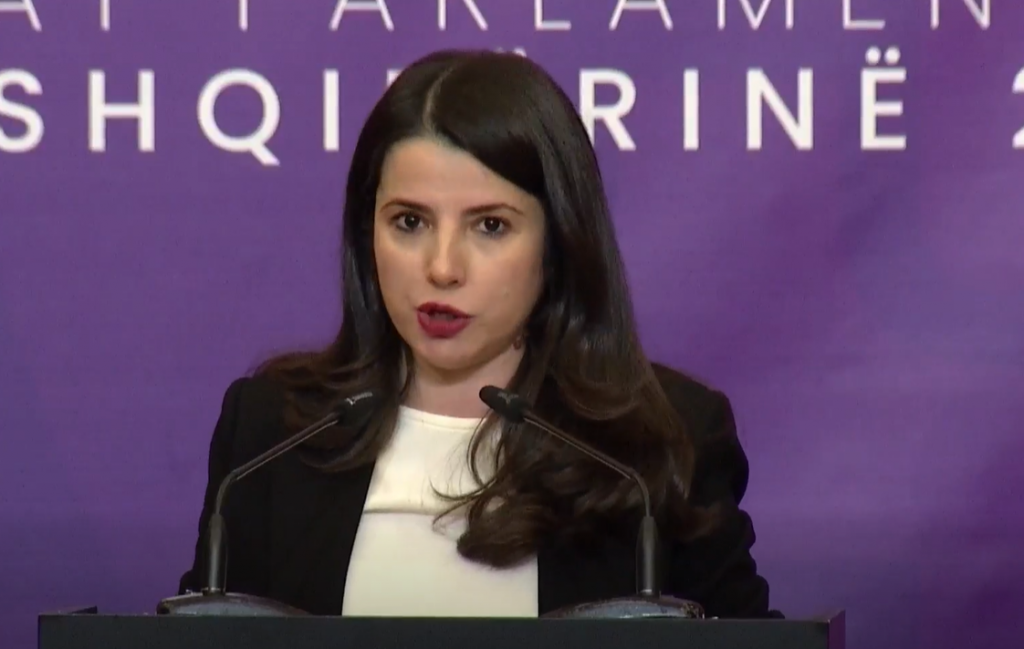
State Minister for Public Administration and Anti-Corruption, Adea Pirdeni, described today the journey toward Administration 2030 as an absolute priority. This initiative prepares Albania for European Union membership.
Pirdeni presented the progress of public administration reform to the Socialist Party parliamentary group. In addition, she outlined the main measures being taken to prevent corruption.
She highlighted SIGMA’s very positive evaluation of public administration performance. According to the report, Albania stands out as the regional leader.
“This evaluation covers four areas: public finance management, human resource management, digitalization of public services, and policy coordination,” Pirdeni said.
Moreover, SIGMA particularly praised the wage reform. This reform represents the deepest structural intervention to give dignity to every civil servant.
“This reform sets a clear career model based on merit, recognition of skills, and continuous review of the wage system,” she added.
Meanwhile, Pirdeni stressed that efforts continue to innovate administration. For example, systems now automatically generate data on all public administration employees.
The minister said the main priority is to transform the administration into a competitive employer. This involves a revised recruitment and evaluation model that ensures transparency and measures performance effectively.
“We aim to reposition the administration strategically as a career choice. Furthermore, we seek to attract professionals with priority skills for EU integration through the initiative ‘Your Career, the Future of European Albania,’” she explained.
Pirdeni also announced the creation of a fully revised employment portal in collaboration with the Ministry of Economy and Innovation.
In addition, during the first half of the year, the government will complete the evaluation of all institutional capacities for EU negotiations. This process identifies sectors with sufficient expertise and those needing reinforcement, particularly through new structures or additional capacities. The focus remains on optimizing resources rather than endlessly increasing staff.
Consequently, the goal is to shift from an administration that negotiates to an administration prepared to implement EU legislation.
In anti-corruption and integrity efforts, Pirdeni stressed that “our goal is clear and uncompromising. We fight corruption by reducing its occurrence every day.”
She added, “Our focus is on preventing corruption, not only measuring success by the number of investigations or convictions. Instead, we focus on the number of cases that do not occur because systems are increasingly resistant.”
This year, the top priority is systemic prevention of corruption in the most vulnerable sectors. For instance, property, healthcare, taxation and customs, education, and public procurement have been identified as areas needing special attention.
Të ngjashme



Latest News



Most read










 RTI