
 English
 Français
 Deutsch
 Italiano
 Turkish
 Greek
 Serbian
8,000-year-old traces preserved in the Historical Museum of Shkodër; Specialist Mlika says the objects date to the Neolithic period




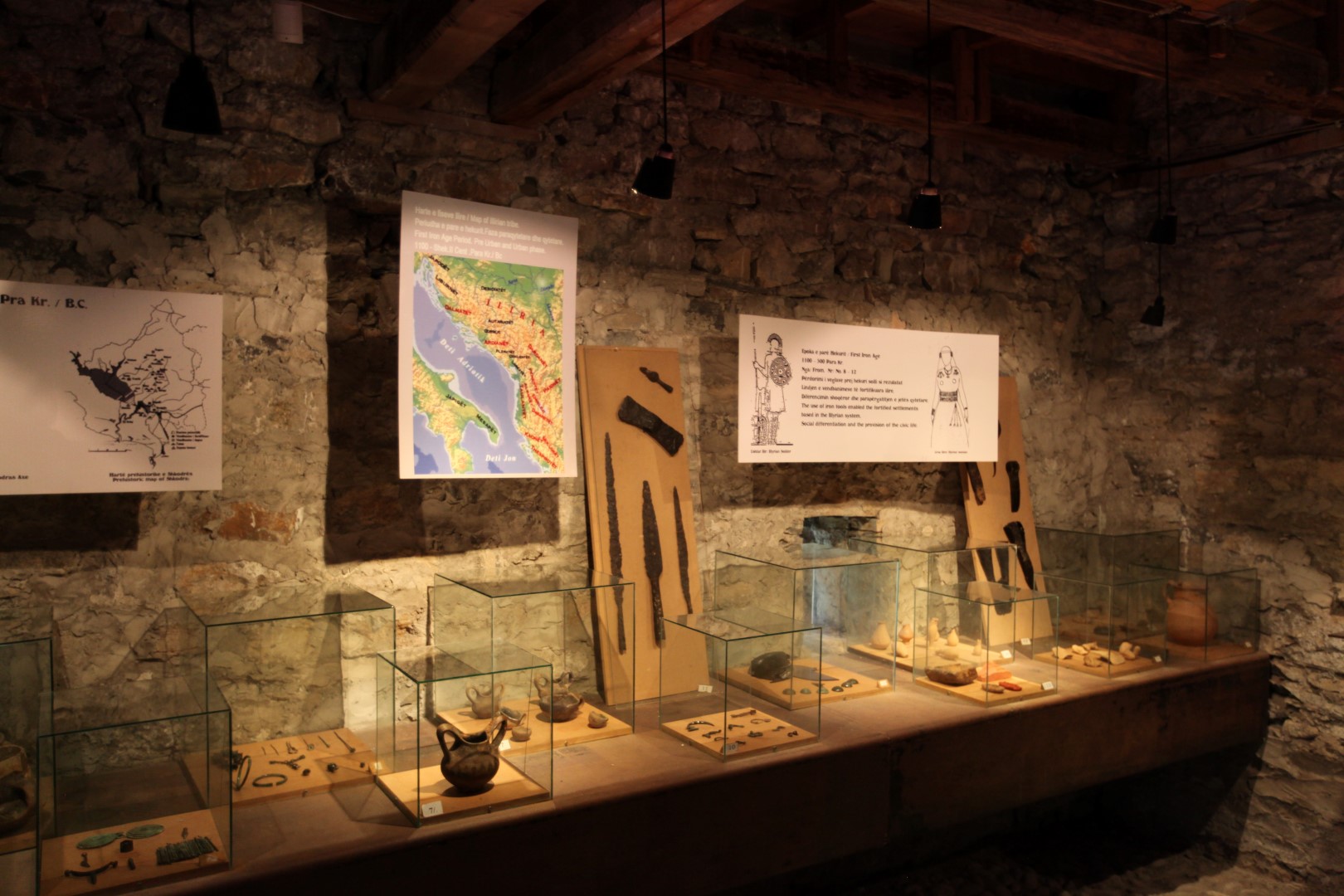
The Historical Museum of Shkodër preserves the earliest traces of human life in northern Albania. Archaeological objects from the Neolithic period, unearthed after thousands of years, provide the oldest documented evidence in the museum.
“The oldest objects are archaeological. The earliest items date to the Neolithic period, 8,000–5,000 years ago. This period is relatively scarce in northwestern Albania. We have only 19 objects and no known settlements so far. Most are tools: needles, cutting instruments, chisels, hammers, and axes,” said Ndriçim Mlika, a museum specialist.
Neolithic findings in the northwest remain limited, making this historical phase a rare segment of the archaeological collection.
“Neolithic artifacts are very rare here. In eastern Albania, the period is much richer. There, researchers discovered the oldest settlement in Europe on the shores of Lake Ohrid,” he added.
The archaeological collection draws strong interest from visitors.
“Visitors find objects from antiquity, the archaic period, and the Roman era particularly attractive. Roman artifacts appear in many museums, but Illyrian items have unique characteristics,” Mlika explained.
This collection provides valuable evidence of early civilization roots, making the museum a key reference point for the region’s oldest history.
Të ngjashme


Latest News








Most read










 RTI