
 English
 Français
 Deutsch
 Italiano
 Turkish
 Greek
 Serbian
Edi Rama presents his book “At the Moon’s Table”: Islamic art museum and “Besa” museum to rise near Parliament




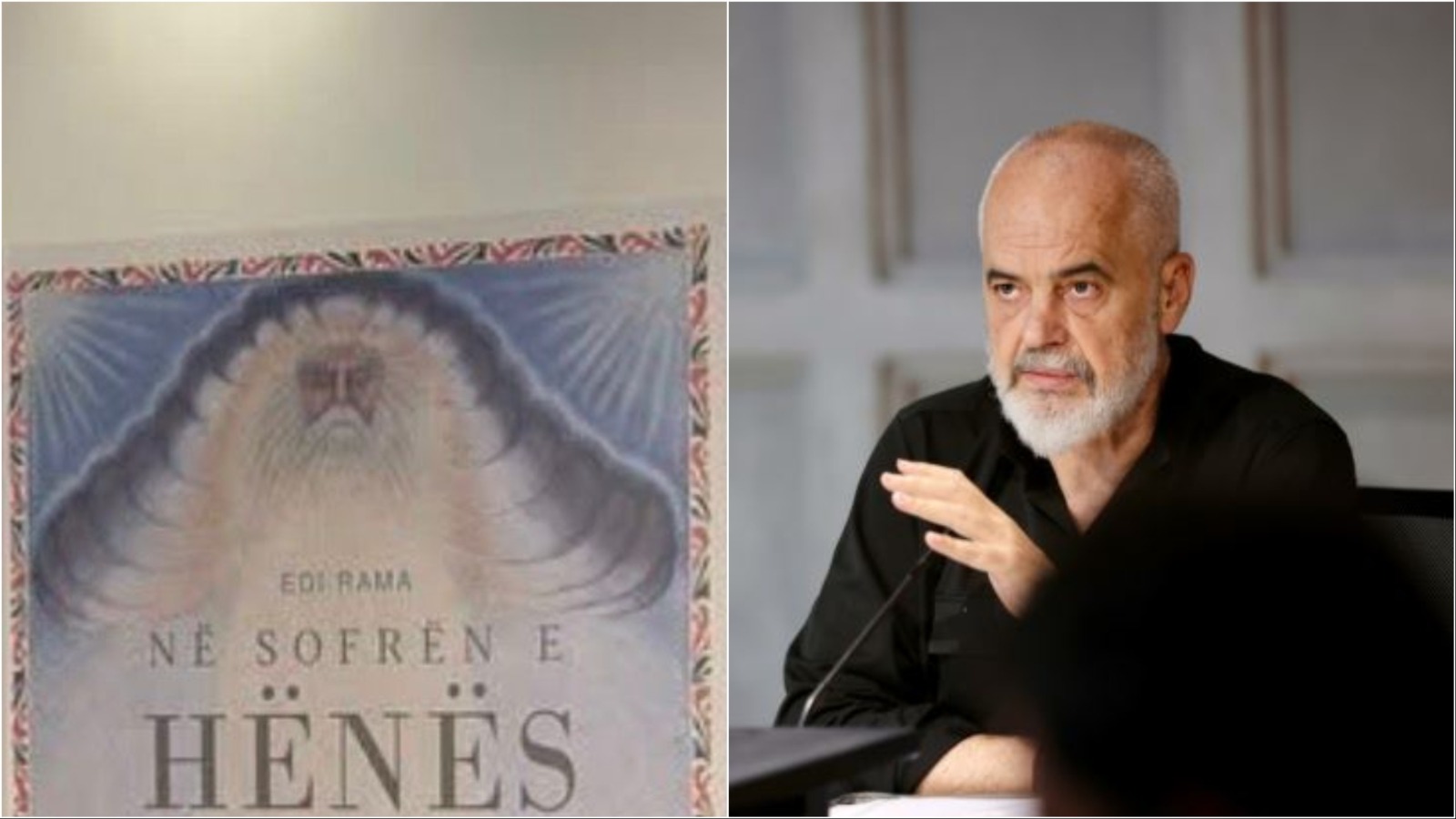
Prime Minister Edi Rama presented his new book, “Në Sofrën e Hënës” (“At the Moon’s Table”), which he said grew out of his experiences hosting iftar dinners as Prime Minister.
Moreover, he explained that “some Muslim friends who fast encouraged me to collect these reflections,” which inspired the book. Consequently, Rama added that he wanted to present it modestly.
“This book collects the iftar evenings I had the privilege to organize in my role. For me, and increasingly through this experience, the iftar table goes beyond those who are fasting. In addition, it brings together people from different walks of life and diverse religious backgrounds. Some Muslim friends encouraged me to gather these words, and today, I wanted to present them modestly,” Rama said.
Highlighting Albania’s religious coexistence, Rama announced that the government will establish two new museums near the Parliament. One museum will display Islamic art, while the other, called “Besa”, will showcase Albania’s relationship with the Jewish community.
“We have a wonderful project to build an Islamic art museum in Albania. Unfortunately, we don’t have one yet. Typically, countries with an Islamic cultural heritage have such museums. Even countries without a strong contemporary Islamic culture often maintain one reflecting their historical roots. Therefore, we will locate it at the former Toptani Palace near Tirana Castle and the Parliament. In addition, the Besa museum will honor our historical ties with the Jewish community and introduce contemporary Jewish culture into our daily life. In this way, it completes a cultural mosaic,” he said.
Regarding the book, Rama said he could have released it before the book fair. However, he decided to wait until the last days to avoid overshadowing other authors. Furthermore, he emphasized that hosting iftar dinners enriched his understanding of Islamic culture, language, and perspective.
“Arlinda had the book ready before the fair, but I didn’t give the green light because it could have drawn undue attention and affected other authors. For me, the final wordsmith on Tirana Boulevard is here with us: Aurel Plasari. Moreover, the iftar table brings us together beyond dividing lines on the boulevard. I am grateful for my friends who practice this faith and for these iftar experiences, which enriched me and deepened my understanding of Islamic culture,” Rama said.
Finally, he emphasized the cultural value of religious coexistence. “Beyond the slogan we often repeat about religious harmony, a treasure of cultures exists here. Therefore, these cultures deserve our dedication, care, and admiration. In addition, they help people see religion beyond prejudice and stereotypes, which is especially important when discussing Islam,” he added.
Të ngjashme
Latest News

Most read










 RTI