
 English
 Français
 Deutsch
 Italiano
 Turkish
 Greek
 Serbian
Travel and Tour World: Albania Is Experiencing A Tourism Explosion: Here’s What Travellers Need to Know!




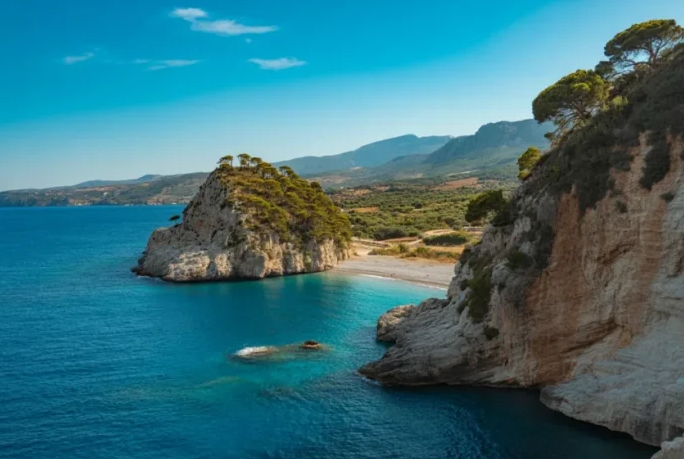
Albania is experiencing an extraordinary spike in its rising reliance on tourism, which is fundamentally changing the Balkan region’s economic environment. Over 12 million international visitors arrived in the country during the 2025 calendar year, according to official data from the Institute of Statistics (INSTAT). This statistic has shocked the local market. This enormous flood of tourists is having a huge positive economic influence on industries including professional services, retail trade, and hospitality. However, foreign observers are raising worries about the sustainability of such a quick increase as the nation rises to the 16th position in the world in terms of sector dependence.
The 12 Million Person Invasion: Why This Hidden European Paradise Is Suddenly Exploding Now
The year 2025 is being viewed as a historical turning point for the Shqipëria [Albania] tourism brand. The arrival of over 12 million foreign visitors has effectively doubled the local population several times over within a single fiscal cycle. It is observed that the expansion is not limited to the traditional summer months, as efforts to promote the Albanian Alps and cultural heritage sites in Gjirokastër and Berat have successfully extended the visiting window. Because the hospitality and services sectors have become the primary engines of national growth, a significant portion of the domestic workforce is being redirected into tourism-related roles. This shift has resulted in a vibrant, albeit specialized, economy that is increasingly sensitive to the whims of international travel trends.
The Danger Zone: Why Being Number 16 In The World Is Actually Terrifying Experts
A startling statistical reality has emerged, placing the nation in a precarious global ranking. According to data, the country now ranks as the 16th most tourism-dependent nation on the planet. This positioning places the local economy in the same high-sensitivity bracket as Malta and Montenegro, where a vast majority of the Gross Domestic Product (GDP) is derived from a single industry. It is cautioned by financial experts that such a high level of sector dependence carries inherent structural vulnerabilities. When a nation’s financial health is so closely tied to the movement of people, any disruption in global mobility can lead to immediate and severe domestic consequences.
The Macau Mystery: How One Small Country Is Outperforming Everyone On The Planet
In a global context, the sensitivity of the local market is being compared to extreme outliers in the tourism industry. While Macau remains the most tourism-dependent territory in the world due to its specialized gaming and leisure sectors, and Papua New Guinea sits at the opposite end of the spectrum as the least dependent, the middle ground occupied by Albania is becoming increasingly crowded. The transition from a diverse agricultural or industrial base to a service-heavy model is being monitored with both admiration and anxiety. The success of the Albanian Riviera is being used as a case study for how rapid market fluctuations can transform a developing nation’s fiscal identity in less than a decade.
The Seasonality Trap: The Dark Side Of Summer That No One Mentions
One of the most significant challenges being identified by the Bank of Albania is the phenomenon of extreme seasonality. Despite efforts to diversify, a massive concentration of revenue is still being generated during a narrow window of time. This imbalance creates a feast-or-famine cycle that can strain national infrastructure and lead to temporary labor shortages. Furthermore, the high dependence on visitor spending means that during the winter months, many regions face economic stagnation. The risk of global crises, ranging from geopolitical instability to health emergencies, remains a constant shadow over the industry, as a single event could potentially halt the primary source of foreign currency for the entire country.
Beyond The Beach: The Secret Plan To Save The Economy From Collapse
To mitigate these risks, a strategic shift is being proposed by government planners to move beyond the sun-and-sea model. Investments are being funneled into agrotourism and eco-tourism projects in the northern mountainous regions to create a more resilient and year-round product. By diversifying the types of visitors and the regions they inhabit, the goal is to reduce the volatility associated with mass tourism. It is argued by local policymakers that the current economic impact must be used as a foundation to build a more multi-faceted economy, rather than a final destination. The success of this transition will determine whether the 2025 boom was a temporary peak or the start of a sustainable new era for the nation.
The Final Countdown: Can This Tiny Nation Survive Its Own Incredible Global Success?
As the 2026 season approaches, the world is watching to see how the local infrastructure handles the continued pressure. The rapid expansion of Tirana International Airport and the construction of new luxury resorts along the Vlorë coastline are indicators of a commitment to further growth. However, the lesson from other tourism-heavy nations like Croatia and Greece is being studied closely: total reliance on a single sector can lead to economic overheating and social friction. The challenge for the coming decade will be maintaining the allure of a pristine, affordable destination while building the safeguards necessary to survive the inevitable shifts in the global marketplace.
Të ngjashme
Latest News



Most read










 RTI