
 English
 Français
 Deutsch
 Italiano
 Turkish
 Greek
 Serbian
Gjirokastër, Albania’s stone city highlighted by Paesionline.it




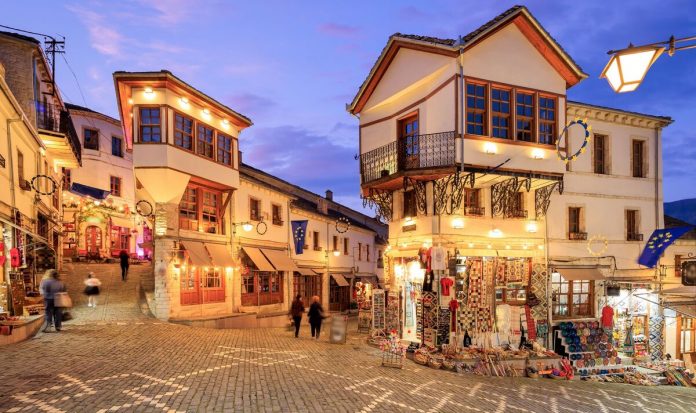
TIRANA, May 4 – The Italian travel portal Paesionline.it presents Gjirokastër as a distinctive historic city in Albania. It describes the city as a stone-built destination that “defies time and leaves visitors speechless.”
To begin with, the report places Gjirokastër in southern Albania, in the Drinos Valley. Its hillside position shapes the entire urban form. Steep streets, stone roofs, and an irregular layout define its structure. As a result, the city stands apart from other urban centers in the country.
In addition, UNESCO lists Gjirokastër as a World Heritage Site together with Berat. It defines it as an outstanding example of a well-preserved Ottoman town. The report also notes that the historic urban structure remains visible in daily life. Streets, houses, shops, and squares still follow the original layout.
At the same time, the article explains the term “stone city.” It links this name directly to the dominant use of stone in construction. Roofs, walls, pavements, and facades all reflect this material tradition.
Moreover, traditional architecture strongly shapes the city identity. Ottoman houses and fortified tower-style buildings stand throughout the area. One example is the Skenduli House. The report identifies it as one of the most visited historic homes. It shows how families combined stone and wood in multi-level structures. It also separates reception spaces from private areas.
Meanwhile, the historic bazaar forms another central element of the city. It features cobbled streets, small shops, and preserved buildings. An 18th-century mosque stands in the same area. Historic churches also appear nearby. Together, they reflect long religious and cultural coexistence.
In this context, trade, religion, and architecture interact within the same urban space. The report describes the bazaar as a living part of the city, not a preserved display.
Furthermore, the castle dominates the landscape above the city. It overlooks the Drinos Valley. It also helps explain the link between geography and urban development.
Finally, the article highlights Gjirokastër’s place in Albanian cultural history. It identifies the city as the birthplace of writer Ismail Kadare. It concludes that Gjirokastër combines architecture, history, and identity in a compact historic environment.
/a.p./
Të ngjashme

Latest News





Most read










 RTI