
 English
 Français
 Deutsch
 Italiano
 Turkish
 Greek
 Serbian
Tropoja Dance, a masterpiece of Albanian spiritual heritage, is inherited by the youth




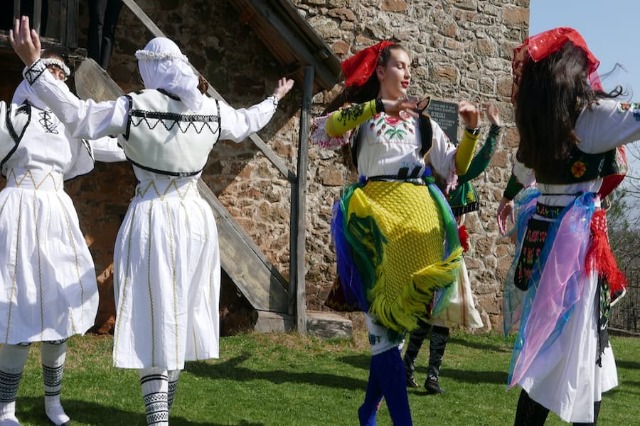
K’cimi i Tropojes(Tropoja Dance) is a festive dance that is practiced throughout the year, and especially during traditional festive ceremonies.The Tropoja Dance can be performed by young people at smaller private social events and relaxed social gatherings.
Skender Haklaj, a long-time choreographer, tells us how Tropoja Dance is performed on stage.
“Dance isn’t just about physical connection; it’s individualistic, soloistic. Dancers express their own motifs, which can then be woven into choreography. Art is a reflection of the environment I come from, and life is a product of that environment,” said choreographer Skender Haklaj, delving into the messages and traditions conveyed through dance.
“While dance may appear free, it carries profound meaning within. Each movement speaks to history, resistance, and more,” underscores the choreographer.
He emphasizes the high interest in traditional dress.
“There’s a keen interest in folk costumes, customs, and, of course, dance, which has even earned UNESCO recognition,” added Skender Haklaj.
He believes that these promotions and cultural activities serve as invitations for both foreign and domestic tourists.

More traditional meanings of Tropoja Dance are related to spring celebrations. Over time, the social meaning of the dance has adapted to changing customs and includes expressions of friendship. Young people use the opportunity given by Tropoja Dance to get to know each other.
Tropoja Dance is played with a tupan drum, a couplet and a fiddle. Its rhythm is fast and joyful. People do not touch each other during the dance, but perform it face to face. The movements are vertical, and the dancers often perform bouncing from the ground, raising their arms up and extending them to the sides, while moving around each other in a limited space, maintaining a face-to-face position.
Members of the community who practice Tropoja Dance in some cases continue to wear traditional ceremonial costumes, although not only those. During more solemn ceremonies, such as weddings, families in Tropoja, or originally from Tropoja but living elsewhere, tend to wear traditional costumes when dancing the Tropoja Dance.
/k.s/
Të ngjashme
Latest News

Most read










 RTI