
 English
 Français
 Deutsch
 Italiano
 Turkish
 Greek
 Serbian
A wonderful collection at the National Museum of Medieval Art in Korça




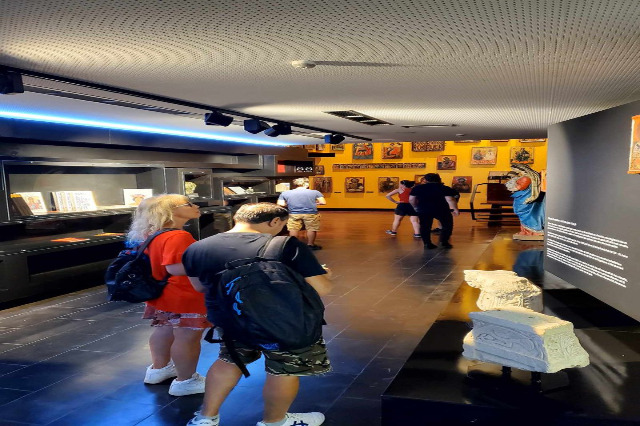
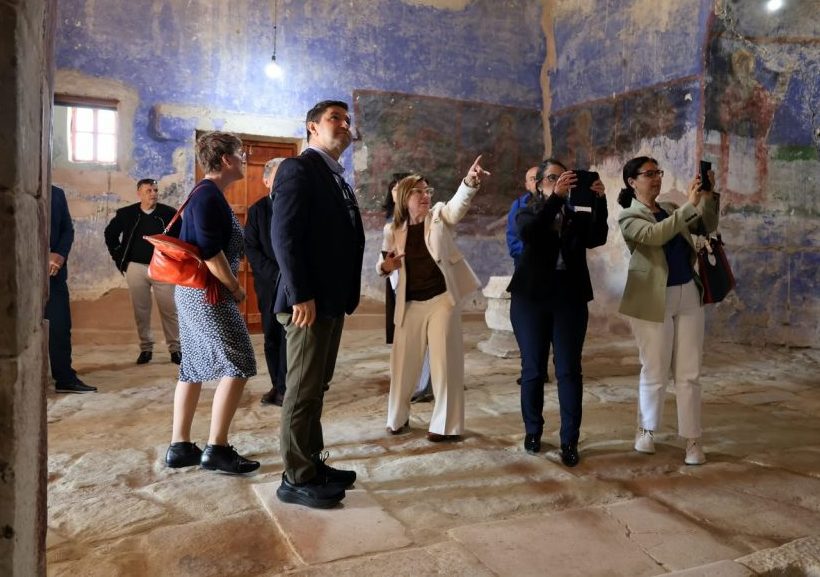
The National Museum of Medieval Art (MKAM) in Korça has transformed into one of the foremost and highly sought-after destinations for visitors. According to the institution, the number of visitors this summer has far exceeded previous years. The museum’s website describes it as a remarkable collection, presenting Byzantine art in perfect harmony with contemporary architecture, rendering the museum truly impressive and a must-visit.
A few days ago, the National Museum of Medieval Art announced that following an extensive examination, specialists from the Restoration and Conservation Laboratory within the museum identified the icon of Saint Mary. The icon, originally from the Church of Saint George in Shipske, has been attributed to the master iconographer of the 18th century, Constantine the Hieromonk. He is renowned for creating nearly all the movable icons of the primary basilicas in Voskopoja, as well as many others both domestically and abroad. The museum in Korça has also shared several photos of the icon on its website.
Kostandin Hieromonaku is distinguished for his remarkable finesse, meticulous attention to detail, and the flawless execution of portrait depiction, harmonizing the human nature with his divine. Established in 1980 and renovated in 2016, the National Museum of Medieval Art is situated along the “Fan Noli” boulevard. The museum holds a significant position as a cultural hub, not only in Albania but also beyond its borders. The museum’s collection comprises over 7,000 sacred and artistic items, predominantly icons, as well as a smaller number of stone, wood, metal, and textile artifacts. These creations span from the early Middle Ages to the start of the 20th century.
The main hall showcases a compilation of icons and artifacts crafted by 20 both anonymous and renowned artists from various regions of the country. Within this hall, a curated collection of the finest icons and objects, spanning centuries and reflecting diverse junctures in the progression of Albanian iconography, is on display. This assortment features the leading figures of Albanian iconography and their pivotal works. Among the presented works are also pieces by anonymous creators from the 13th to 14th centuries, alongside well-known names such as Onufri, Onufr the Cypriote, Teacher Constantine, Jeromonak, Shpataraku, Selenicasi, the Zografi brothers, and more.
/m.ll/
Të ngjashme

Latest News




Most read










 RTI