
 English
 Français
 Deutsch
 Italiano
 Turkish
 Greek
 Serbian
The Museum of Medieval Art presents the restored icons for the first time




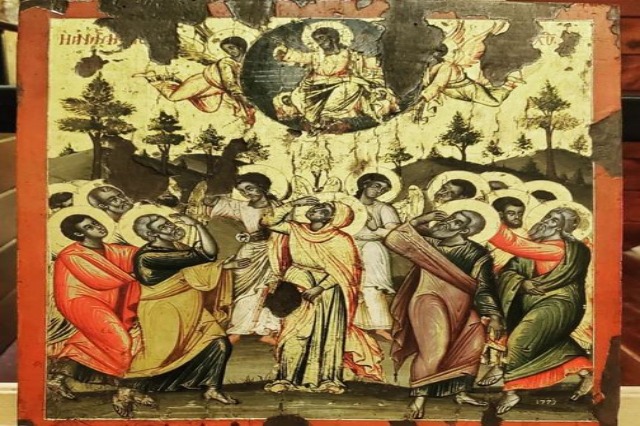
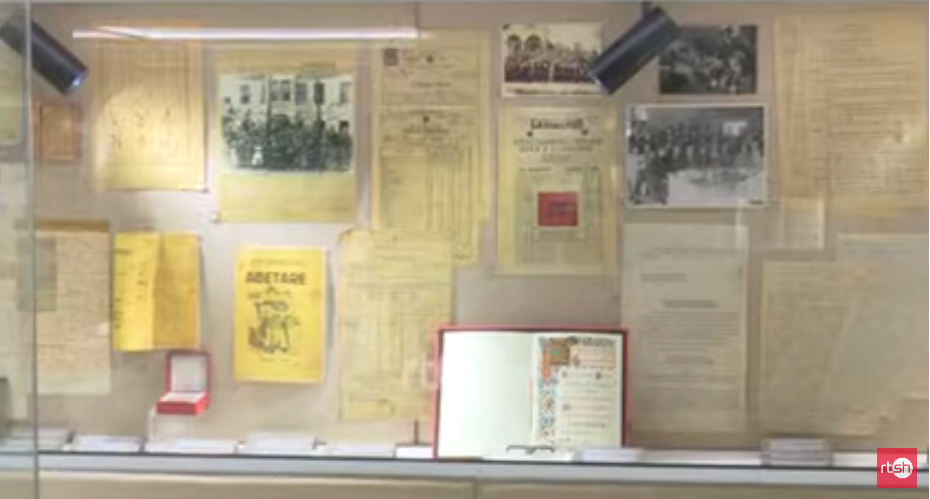
The exhibition opened at the National Museum of Medieval Art (NMMA) in Korça exhibits 13 icons, which are presented to the public for the first time after the restoration work that has been done on them.
The exhibition “Byzantine Painting in Albania” is a temporary exhibition. One of the exhibited works is “Ascension to the sky”, painted by the studio of the Zografi brothers, from Korça, for the monastery of Saint Peter and Paul in Vithkuq, Korça. According to NMMA, this scene is rich in symbolism, which is described in the Gospels of Luke and Mark. A distinctive feature of the iconographic works of K. & A. Zografi are their massive and dynamic scenes. The Mount of Olives, in which the event takes place, is presented with rich and lush vegetation. The representation of olive trees constituted a fundamental iconographic element, pointing to this symbol of peace, which signifies hope for a new life.
Another important icon is that of Saint Diela, an icon that originates from the Church of Ristoz in Mborje, Korça. The icon of Saint Sunday dates back to the 14th century. It features Saint Diela, a great martyr who is honored by the Orthodox and Catholic Churches. He was martyred during the reign of Emperor Diocletian in Chalcedon.
She received this name from her parents as she was born on Sunday. The portrait and the fleshy parts are painted with bold contours and in dark color, with ocher and without many tones.
The contrast is strong, almost graphic. The painting style is similar to that of the murals in the hermit churches of Prespa and the murals of the church of Ristoz in Mborje.
Another icon that NMMA singles out through posts on social networks is that of the “Crucifixion of Christ” from the Church of Evangelization in Berat. This icon is made using the tempera technique on panel.
The National Museum of Medieval Art in Korça was inaugurated on April 24, 1980. It is one of the most important museum centers in Albania. Its fund has cult objects and art, mainly icons and less stone, wood, metal and textile works created from the early Middle Ages to the beginning of the XX century by anonymous and well-known artists from different parts of the country.
/k.s/
Të ngjashme
Latest News




Most read










 RTI