
 English
 Français
 Deutsch
 Italiano
 Turkish
 Greek
 Serbian
Albania moves towards instant payments, saving citizens and businesses millions




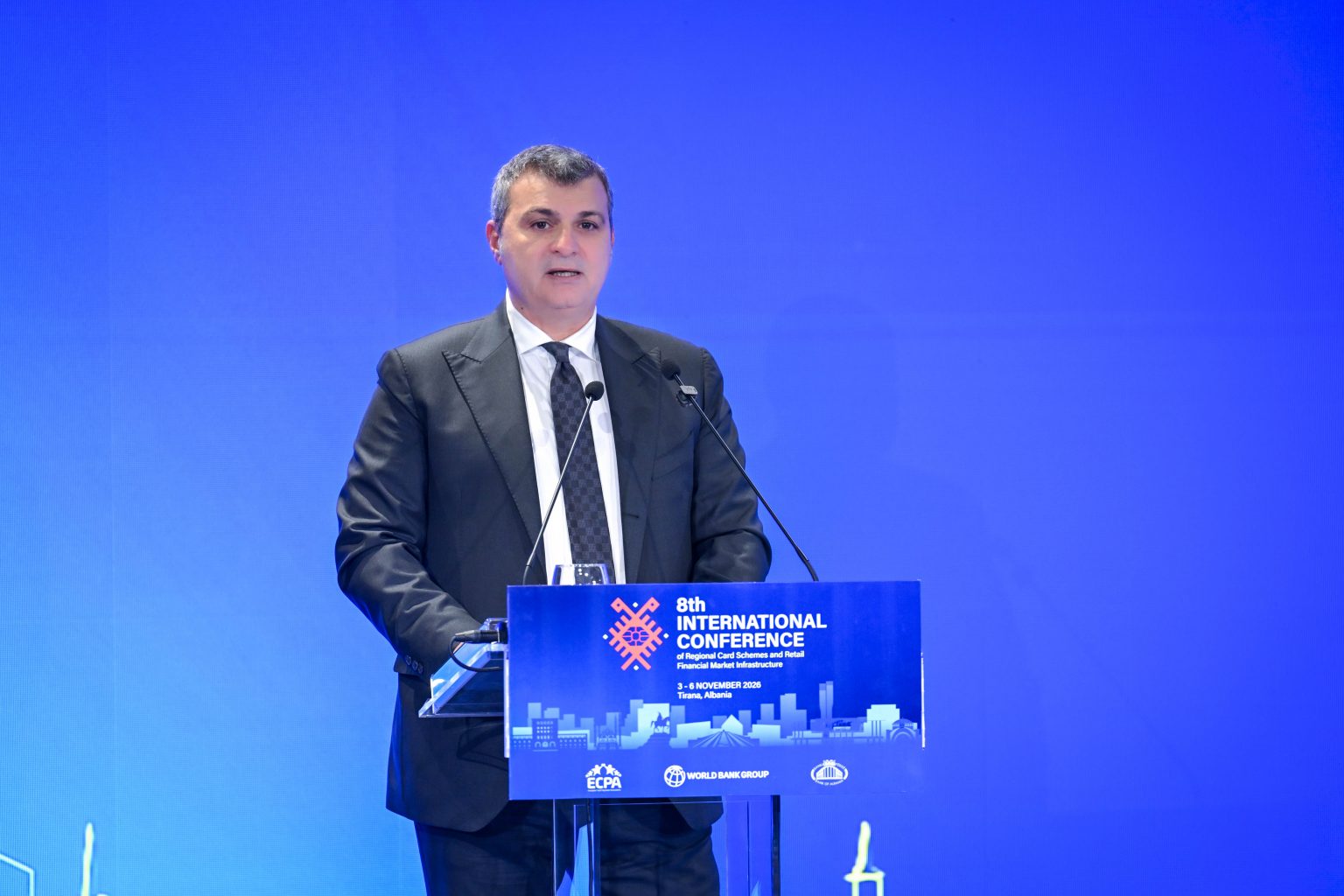
Albania is taking an important step towards modernising its payment system through the regional TIPS Clone project. The new system will allow people and businesses to transfer money instantly, 24 hours a day, seven days a week.
Bank of Albania Governor Gent Sejko announced that the system is expected to become operational by the end of this year. It will give citizens immediate access to transferred funds. Meanwhile, businesses will benefit from faster payments and more efficient cash-flow management.
Speaking at the 8th International Conference on Regional Card Schemes and Low-Value Financial Market Infrastructures in Tirana, Sejko highlighted the economic benefits of digital payments.
According to a joint study by the World Bank and the Bank of Albania, wider use of electronic payments could generate annual savings of up to 38.7 billion lek, equivalent to around 1.5% of Albania’s GDP.
Furthermore, replacing half of cash bill payments with electronic transactions could save consumers more than 500 million lek and businesses around 1 billion lek every year.
Sejko stressed that the new infrastructure would offer benefits beyond faster transfers. It would support new financial services, expand digital payments and accelerate the digitalisation of economic activity.
He also highlighted cooperation with the Bank of Italy and European partners, which he said would help bring the region closer to EU financial standards.
Digital payments continue to grow
The two-day conference has brought together around 260 representatives of public authorities, central banks, financial institutions and the payments industry from 85 countries. It is the first event of its kind hosted in Albania.
During the conference, Sejko presented the progress Albania has made in modernising its payment market over the past decade.
The number of digital payments per person has increased from five a year to 29. Their annual growth rate now stands at around 25%.
Meanwhile, the number of payment cards in circulation has reached 1.6 million. In 2025, for the first time, people used these cards more often for payments than for cash withdrawals.
SEPA membership cuts transfer costs
Sejko also highlighted Albania’s membership in the Single Euro Payments Area (SEPA), describing it as a major achievement in the country’s European financial integration.
Thanks to SEPA, euro transfers to participating countries now cost up to 20 times less than before membership. The expected savings for the Albanian economy exceed 71 million euros a year.
These lower costs support trade, make remittances easier and encourage people and businesses to use formal financial channels.
Cybersecurity remains a priority
However, Sejko stressed that the expansion of digital services must go hand in hand with stronger security measures.
He called for greater operational resilience, better protection against cyber threats, stronger data security and effective measures to prevent fraud.
He also underlined the importance of financial education and inclusion. People from all sections of society must be able to understand and use the new services safely.
World Bank supports payment system reforms
On the sidelines of the conference, Sejko met with Xiaoqing Yu, the World Bank’s Director for the Western Balkans, and other representatives of the institution.
They discussed cooperation on the TIPS Clone project and the modernisation of Albania’s payment infrastructure. They also explored opportunities to expand technical assistance in areas such as banking supervision.
World Bank representatives praised Albania’s progress in digital payments and European financial integration. In particular, they highlighted SEPA membership, the advancement of TIPS Clone and the successful completion of the Financial Sector Assessment Program.
They also welcomed the Bank of Albania’s work to align the country’s legal and regulatory framework with European standards.
Overall, the new instant payment system is expected to make financial transactions faster, reduce costs and support Albania’s transition towards a more digital economy.
/a.c/
Të ngjashme


Latest News


Most read










 RTI