
 English
 Français
 Deutsch
 Italiano
 Turkish
 Greek
 Serbian
Berati folk clothing and iso-polyphony




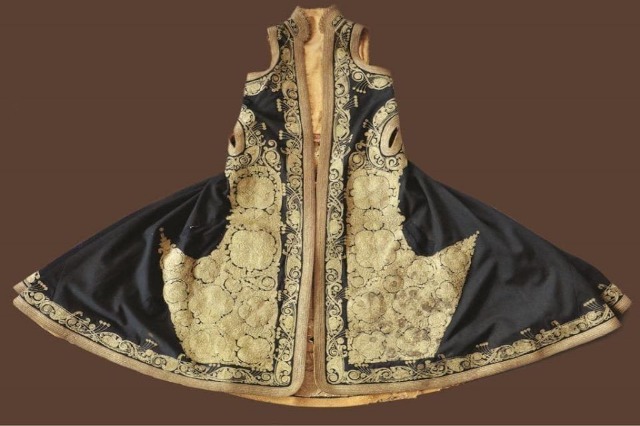
Cultural heritage includes tangible and intangible cultural property, as a set of cultural values bearing historical memory and national identity, of scientific and cultural importance.
Folk Clothing is one of the most important elements of folk art. Clothing is characterized by an artistic beauty and varies by region and gender. Folk clothes are compared to the Albanian language and other cultural traditions, they represent history in themselves.
The costume is a provincial symbolism; the clothes have been preserved and adapted until today from the South to the North. Clothing is a priceless treasure for the cultural tradition of our people. We divide the clothes into North Albania, Middle Albania and South Albania.
The clothing tradition of Berat residents is one of the most unique in Albania. This is also because the city of Berat has a very ancient history and culture, which is also reflected in special elements of clothing. The history of the city is best reflected especially in the decorative elements in women’s clothing such as long velvet dresses, jackets, vests that have a great difference from the clothing of other cities in Albania. This becomes even more evident in the decorative elements of the embroidery.

There, the luxurious elements of the Byzantine period, such as purple velvet or black cloth, which were composed of imported materials, can be distinguished very clearly. We also have materials made of high quality silk that was mostly used for middle class girls’ clothing and used in ceremonial occasions. Clothing with oriental elements are also not excluded, which over time became even more present. But, without a doubt, we also find oriental influences in these clothes, such as women’s wide leg bloomers, folk costume called dollama, etc.
While men’s clothing before 1912 mainly consisted of frocks. The change of clothes also determined the religious belief. Christian men wore dark blue material embroidered with black silk, while Muslims generally used gold thread embroidery. The men of the city gave up long before the dress and other folkloric elements, replacing them with modern costumes.

In the rich folklore of Berati, an important place is occupied by isopolyphony, which is the musical phenomenon in South Albania. It is built on the basis of one or several solo voices accompanied by iso, sung by a group of singers. We find it sung at joys, weddings and various parties, both by men and women. However, iso-polyphony is also found in funeral ceremonies.
Due to the historical importance of the city of Berat during the Ottoman Empire, as well as its geographical features, the formation of civic music followed the flow of other cities of Toskeri region and Labëria.
Thus, from the Turkish invasion until the beginning of the XIX century, the musical culture of the city of Berat appears as a monodic culture, cultivated by female musicians, while we find that the new civic musical culture, iso-polyphonic, begins and develops there at the beginning of the XX century from the saze formation, in parallel with the folk music of Tosker region.
/k.s/
Të ngjashme

Latest News


Most read










 RTI