
 English
 Français
 Deutsch
 Italiano
 Turkish
 Greek
 Serbian
Celebration of “Novruz Day”, the festival of renewal of life, rites, and customs




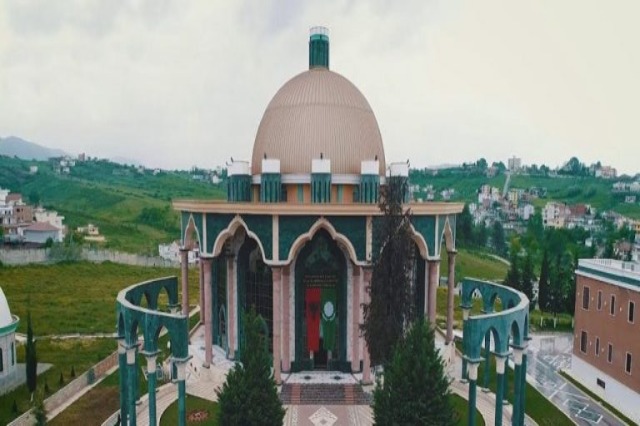
Around the world, on March 22nd, Bektashi believers celebrate what is known as “New Day” and the birthday of Imam Ali, also known as Novruz Day. The festival originates from Ancient Iran (Persia) and essentially signifies the renewal of life, as well as the beginning of the new solar year (where the day starts taking more from the night).
In Albania, this festival commemorates the birthday of Ali ibn Abi Talib (died in 661 AD) and also marks the arrival of spring.
Establishment of the World Bektashi Headquarters in Tirana
The World Bektashi Headquarters was initially in Turkey. In 1925, Ataturk’s government issued the decision to close all tekkes (religious lodges).
In 1929, King Zog’s government brought the Headquarters to Albania. Initially, it was established in Korça, at the tekke of Turan (a village in Korça), operating for two years. The center in Turkey was turned into a museum and still functions to this day. Pilgrimages are made there every August in memory of Haji Bektash Veli. King Zog’s government, respecting the will of the Bektashi clergy, appointed Sali Njazi Dede as the World Bektashi Leader in March 1931, and he established the World Holy See in Tirana.
The World Bektashi Leader, Sali Njazi Dede, led the Bektashis, treating them as an organized religious community, not political or state entities. The World Bektashi Headquarters has its early and contemporary history and is one of the four traditional religious communities in Albania. Today, the World Bektashi Headquarters, besides being a cult object, has also become a tourist destination for many tourists from all over the world.
Novruz Day was declared a public holiday in 1996 and is a day of remembrance especially among Bektashi believers (due to their Shiite affiliation), but also adherents and believers of Sunni Islam, Catholicism, and Orthodoxy also “participate in the Novruz Festival to respect the ecumenical spirit of Albania.”
Among these three non-Bektashi groups, the Sunni community of Albania seems to be the largest supporter of Novruz.
The celebration of Novruz by the Bektashis aims to achieve two goals:
The first is the legitimization of the so-called mysticism monopoly within Albanian society, including everything that can be seen as esoteric and/or a new era to portray the ‘ecumenical uniqueness of Albania’.
The second is the involvement of a larger number of believers, especially young people (the majority of the population) who have grown up in a post-secular society and are fascinated by Western socio-economic models, mixing Bektashi tradition with progressive science and political rationalism.
Early in the morning, newlyweds and children are given a glass of milk, symbolizing the birth of a new day, health, and as much breast milk as possible for brides who will give birth to children. It is called “God’s milk” when the lady of the house distributes milk on this day, which is understood as abundance and prosperity even for the poor and needy, or in villages, pancakes with honey are made and children roll them in the fields with grain to bring prosperity.
Sultan Novruz makes a call to rise above greed, vice, and wickedness, conveying the message for the appreciation and protection of our national values, love for one another, national brotherhood, religious and interfaith tolerance. It doesn’t matter what sacrifice is made, as it depends on people’s capabilities; what matters is to make a sacrifice, to make a pie, sweets, and share them with anyone in need who asks for help.
Novruz Sultan is celebrated for three consecutive days.
On the first day, it is celebrated within families, where all members gather to enjoy the characteristic lunch of this day.
The second day is for the elders; they gather at sacred places to honor the imams. They bring ample food with them and celebrate together.
While the third day is for women and young brides. They gather to celebrate and entertain themselves. The festivities begin in the morning and continue until the lights of the tekke are lit.
On this day, the Mevlud is sung (characteristic songs with prayers and praise for Imam Ali), and believers come to the World Headquarters of the Bektashi Order in Tirana and to every Bektashi tekke in Albania, Macedonia, Kosovo, Turkey, America, etc.
Visits are made to each other on this day. Today, many believers say that even when religion was banned by law in 1967, they secretly performed religious ceremonies like Sultan Nevruz, Ashura, Eid al-Fitr in their homes.
What do believers cook?
On this occasion, Bektashis cook characteristic dishes, which are pies with 12 different kinds of greens (spinach, leeks, parsley, cabbage leaves, dill, coriander, sorrel leaves, chives, rice, etc.). The plants symbolize the new life that blooms in spring and prosperity; inside the pie, a metal coin is also placed. After the pie is baked, it is divided from the center of the house outward into pieces and then each family member is given a piece. Whoever finds the coin in their piece is lucky. They will have a prosperous and successful year.
On this day, a glass of milk is also drunk, symbolizing the birth of a new day.
On this day, chicken or lamb meat is also cooked. The traditional dessert of this feast is “sultiashi.”
Sultiashi is a dessert made with milk, which symbolizes mother’s milk; rice, which symbolizes grains and abundance, and syrup. As a dessert, kabuni (with rice, meat broth, sugar, dried grapes, and nuts) can also be cooked.
On the occasion of the Novruz Festival in 1991, the World Headquarters of the Bektashi Order (Bektashi headquarters) in Tirana was reopened after the communist period, in a touching ceremony attended by Mother Teresa. During the Novruz Festival in 1999, Naim Frashëri (1846 – 1900), the prominent Albanian writer and patriot of the Albanian national movement, who was also a Bektashi, was almost declared a saint as “Father of Honor.”
/k.s./
Të ngjashme


Latest News


Most read










 RTI