
 English
 Français
 Deutsch
 Italiano
 Turkish
 Greek
 Serbian
Forbes: In Albania, serious property potential emerges on its quieter Northern coast




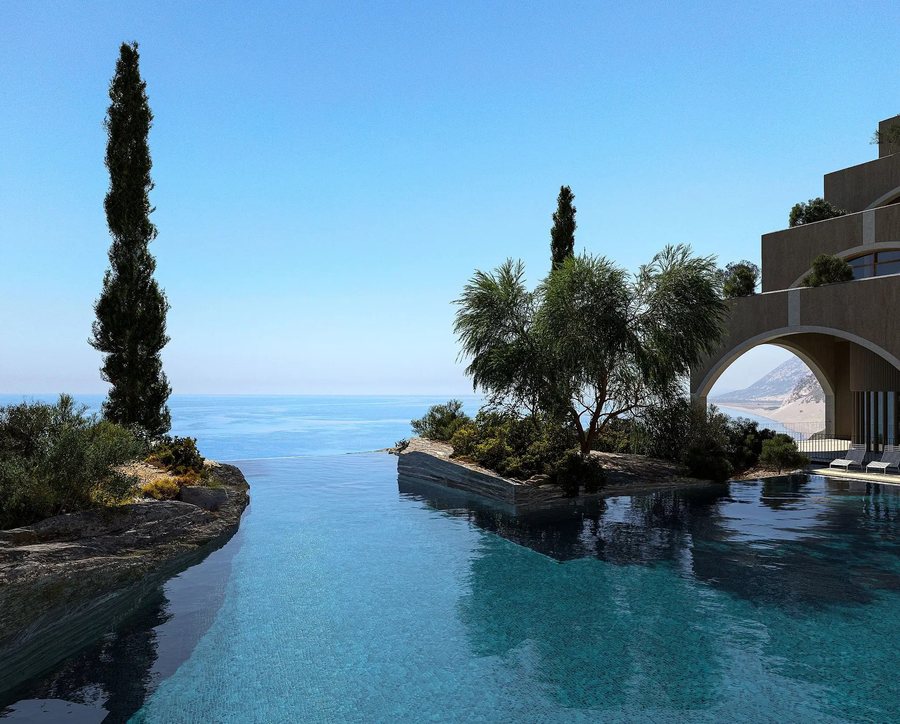
‘At the narrowest point across the Straits of Corfu, it’s little more than a mile between Albania and one of Greece’s most popular tourist islands. Close enough on a calm summer night to just about hear dogs bark, scooters hum and the blurry murmurs of conversation. Yet Albania, to many, remains a mystery’, writes Zoë Dare Hall for Forbes.
It’s a country that—despite being surrounded by age-old Mediterranean vacation hotspots, and some newer Balkan ones, including Montenegro—is still striving to assert its presence in this century, having been isolated under a communist dictatorship for half of the last one.
However, parts of Albania’s beautiful 300-mile coastline have been discovered—and are being developed rapidly. How could they not be, when the peaceful, pebbled bays of the Albanian Riviera, in the south of the country, share a sea as stunningly blue as Corfu’s? As soon as Albania began to open its borders to foreigners in 1991, following the death of its dictator Enver Hoxha in 1985 and the weakening of the regime, the south’s beach towns—Sarandë, Dhërmi, Ksamil—began to attract travelers looking to head off the beaten track.
Northern Albania’s coast, however, remains a mystery to most outside the region. Until the early 1990s, not even Albanians were allowed near the sea here. These days, the beach town of Shëngjin—famous for its sunsets—is a popular spot for Albanians from the capital, Tirana, just over an hour’s drive away, and day-tripping families from neighboring landlocked Kosovo.
But there’s still an undeniable feel of venturing into the unknown as you snake a little farther north along the Rruga Riviera road towards Rana e Hedhun—a huge dune that rises up to pine forests, hence its name that translates as ‘poured’ or ‘thrown’ sand.It’s within sight of here, in a place of pristine and peaceful isolation, that the area’s first luxury project, the Dukagjini Resort, is taking shape on a 27-acre site that descends from the rugged, rocky hillsides to a golden, sandy beach.
The first Albanian project by Kosovan developers the Dukagjini Group, its architect is Chris Precht, from the experimental, eco-focused Austrian practice, Studio Precht. He has already made a name for himself in Albania for his experimental designs that use natural materials with minimal impact on the environment—including an installation called Eden Park in Prime Minister Edi Rama’s office. Precht is also the visionary behind The Northern, near Shëngjin, in collaboration with W10 Architects, whose apartments emerge dramatically from a craggy rockface that straddles the bends of the precipitous, mountain road.
While The Northern is still in the planning pipeline—though its 43 units are selling fast, mainly to Kosovans and Albanians—the Dukagjini Resort is already rising from the rocks. Set high up are the Dukagjini Residences—189 in total, in 11 low-rise, stone-clad buildings whose sweeping arches look like eyes waking up to serene views where sea melds into sky. At night, these illuminated apertures shine like jewel boxes amid the dark scrub of the deserted hillsides. Separately, a further 187 residences set in 20 blocks form Veranda Village, framing the road that winds down to the beach where a timber-clad five-star hotel sits on the sand.“This is more than a development, it’s a design landmark that will redefine this stretch of Albania’s coastline.
The architecture follows the terrain rather than imposing itself on it,” comments Brandan Mativi, founder of Capital Point | Forbes Global Properties. “Calm, expansive, timeless,” he purrs, gazing out across a shimmering Adriatic Sea where the next stop is somewhere around the heel of Italy’s boot.The whole development has the wow factor, given its pioneering architecture and ambition in a new location. Interiors are minimalist and modern. Amenities include underground parking, concierge, shops and restaurants. And while the beachfront hotel—part of the Swissôtel brand—will have “Zen nature vibes,” according to Mativi, its casino, spa and small marina will ensure year-round occupancy from the wealthy Tirana crowd seeking escape from the city.
“This is only the beginning for the area. Millionaires are already pouring into the south of Albania, but this is the first high-end project in the north. It’s already 60% sold within eight months since building started, and still two years from completion,” Mativi says.
A certain showstopper, however, is the residences’ swimming pool, carved from natural rock and cantilevered so that it hangs over the hillside. Of the 12 penthouses in this part of the development, Mativi has bagged the best three—the front two, where it’s just you and the endless ocean from your hot tub on the terrace, and the largest, highest one at the back—to tempt international buyers.
Albania’s lower to mid-market—around the €200,000-plus (around $237,000-plus) mark—tends to attract Eastern Europeans, particularly from Poland and the Czech Republic, Mativi explains. But the higher end—properties costing over €1 million (around $1.19 million)—are most likely to attract buyers from the U.K. or U.S.
“These penthouses are priced at €1.6 million (around $1.9 million) now, at the beginning of construction, but prices will have doubled by the time they are complete in 2028,” he projects.
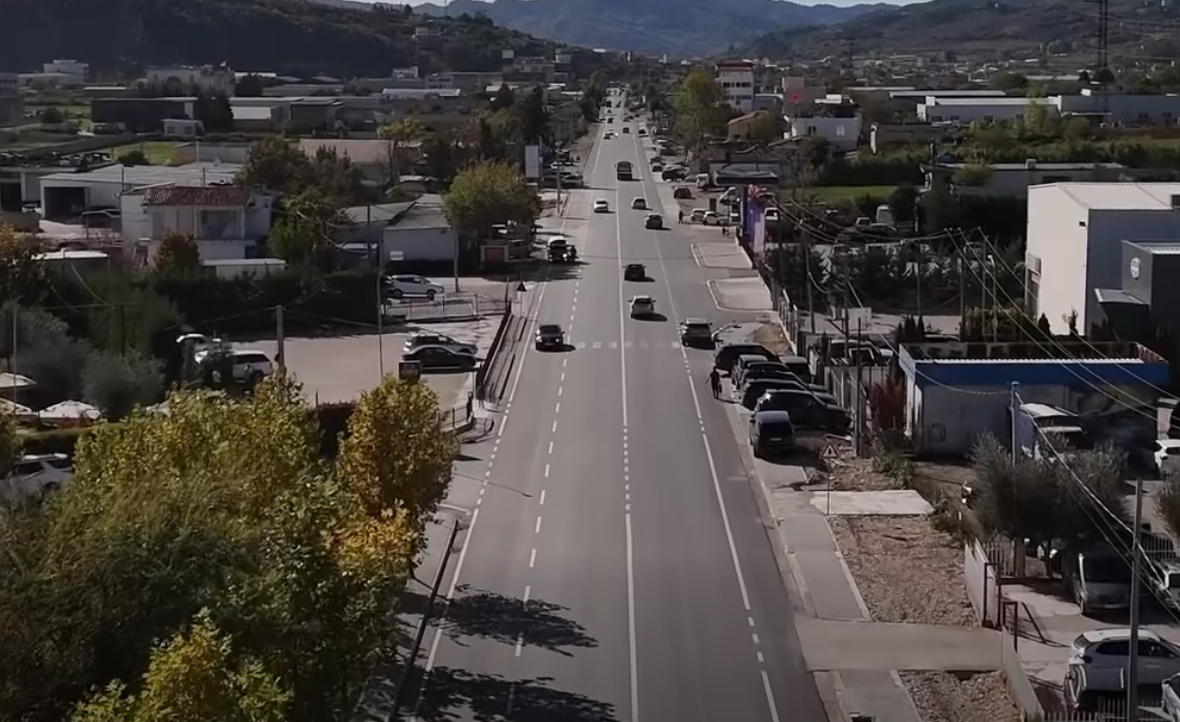
This location may currently leave the beaten track in the distance, but that will also have changed in the next two years, with a new bypass bringing Tirana within 45 minutes of Shëngjin. Another highway extension will provide a new fast route between this corner of Albania and Montenegro, an emerging hotspot for yacht-owning crypto-millionaires.
It may be the Albanian capital making headlines for its innovative new skyscrapers, but it’s the modern architecture emerging from the craggy, pine-clad hillsides of a place that was out of bounds 35 years ago that is putting an entirely new location on the luxury residential map.
“It’s a reflection of where Albania is heading,” says Mativi. And in troubled times, it’s precisely this kind of designer isolation—with baked-in investment potential—that the world’s wealthy are looking for.
Të ngjashme
Latest News
Most read










 RTI