
 English
 Français
 Deutsch
 Italiano
 Turkish
 Greek
 Serbian
On the publication anniversary of the poem Cattle and Agriculture in 1886




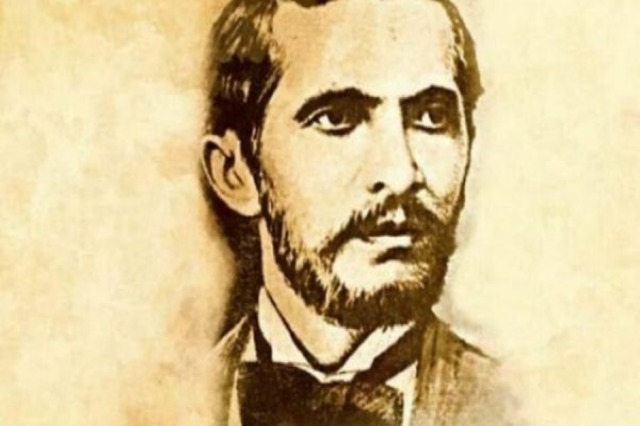
The poem Cattle and Agriculture was published on May 6, 1886. It is one of the most beautiful and inspired works not only of Naim Frashëri, (the National Poet of Albania), but also of the entire literature of the Albanian Renaissance. No one before Naim had sung of love and longing for the homeland, national pride and the beauty of the Albanian nature with such a fiery passion and with such a sweet and beautiful poetic language. With this poem, Naim Frashëri created the great poetry of the Motherland and Albanian nature. This work not only became beloved by the compatriots, but also created a rich tradition for the poets who came after. As the title indicates, the poem consists of two parts. In the first part, it sings to livestock work, the life and work of the shepherd, while in the second part, it sings to the work of the farmer. From them, the poet only takes a starting point to express his ardent patriotic feelings. Indeed, the work is an inspired poetic hymn dedicated to the Motherland, nature and its people. The poem opens with a magnificent apostrophe, which with surprising clarity brings before our eyes the beauties of Albanian nature, its diversity and colors, an endless landscape full of light and vitality.
Oh mountains of Albania and you, tall oaks, wide fields with flowers that I remember day and night, you, beautiful shores, and you crystal rivers, mountain tops, hills, slopes, gorges and green forests. I will sing the cattle you breed and feed, oh you blessed people of that country, you entertain my mind.
The motif of homesickness begins in these verses and describes the entire poem. Far from his homeland, far from mountains and fields, far from magical nights and mornings full of life noises, the poet felt a longing for everything Albanian. Everything is beautiful in the homeland. The desire to return is irresistible. With apostrophes full of excitement, he addresses the “winged butterfly” or the “beautiful swallow” to take his longing heart and lead him to Albania. Particularly striking is the similitude, built on the basis of popular images taken from the life of the Albanian shepherd and farmer:
When lamb hears its mother’s voice, the way it leaves the herd;
As it bleads two or three times and beats away to its mother;
Even twenty or thirty people would try to block and scare it away;
That doesn’t turn it back, rather it runs through like an arrow;
So does my heart, leaves me here, to where I am;
And comes running and willingly there, to your lands.
Another powerful motive, which makes the poem dear and inspiring even for us today, is pride for Albania, pride for the Albanian name. With passionate patriotic love and pride, Naim expressed one of the most important ideas of the national movement. He aimed to awaken the national consciousness among his compatriots, to make them aware that they were sons of a country with universal values, of a homeland that expected a lot from them. The poet’s voice echoes:
You Albania, give me honor, give me the name Albanian;
You filled my heart full of desire and fire.
It was the first time in our literature that such a thing was expressed so beautifully, with such passion and dedication. In these two verses, Naim embodies a great and eternal idea: honor and dignity are given to man by the Motherland, the clay of the birthplace, made with blood and sweat, with history and traditions, with nobility, generosity and all other moral values; happiness, joy and the meaning of life can be found in one’s homeland, in one’s hearth, among one’s own people. These immortal verses had an extraordinary impact on the compatriots, especially since many Albanians, taught in foreign schools and blinded by anti-Albanian propaganda, were ashamed to affirm their true nationality. Naim’s verses touched their hearts, directed their eyes and soul to the Motherland, reminding them of their duty as his sons. Naim’s poem is a typical romantic work. The rich world of feelings, the desire to escape “from worries, from rumors”, from the chaos of the Anatolian city, creates a special emotional state. But Naim’s romanticism is active. The poet does not retreat to the bosom of nature to languish in solitude and sorrow. In spite of being amazed by the beautiful Albanian nature, by the simple and honest life in his country, by the nobility of the working people, he wanted to encourage the Albanians to love the Motherland, to return to their land.
/a.p./
Të ngjashme


Latest News







Most read










 RTI