
 English
 Français
 Deutsch
 Italiano
 Turkish
 Greek
 Serbian
Radio Tirana marks World Radio Day with nearly a century of broadcasting




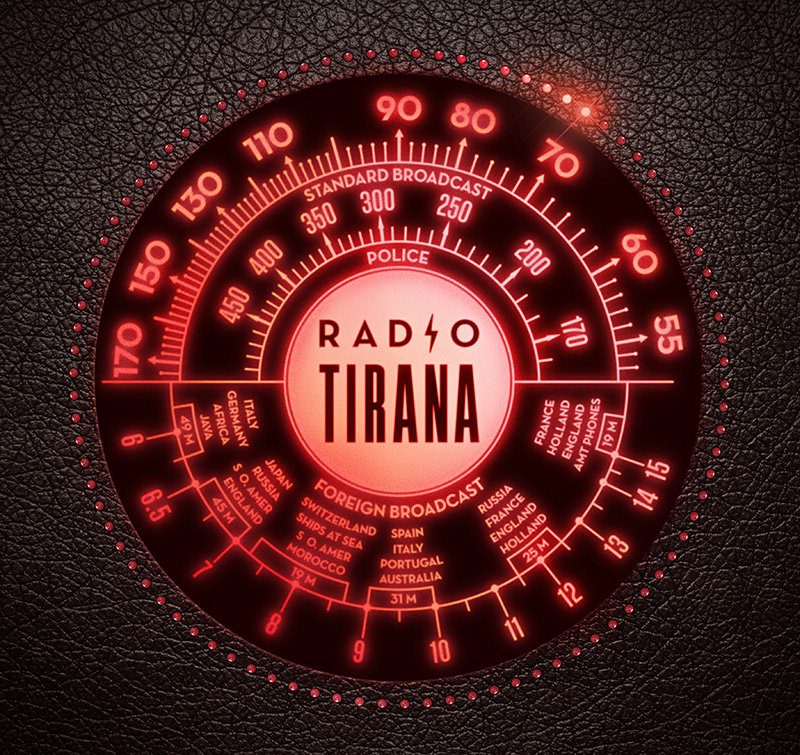
TIRANA, February 13 – World Radio Day highlights the enduring role of radio in informing societies and connecting communities worldwide. In Albania, Radio Tirana stands as the country’s first and most historic broadcaster, tracing its origins to the interwar period.
Early foundations
Efforts to promote Albanian broadcasting began in the 1920s. A group of Albanian students in Bari attempted to launch radio transmissions about Albania, although it remains unclear whether the signal reached the homeland.
Regular broadcasts began in 1936 under an intergovernmental agreement with Italy. Radio Bari aired a daily 30-minute program featuring news from Albania and abroad, alongside music.
That same year, Radio Tirana started operations in the old City Hall building in Tirana. The station used a 3 kW transmitter on the 40-meter shortwave band.
War years and foreign control
Fascist Italy occupied Albania in May 1939. Authorities placed Radio Tirana under the Directorate General for Press, Propaganda, and Tourism.
During this period, the station expanded its foreign-language output. Broadcasts began in Serbo-Croatian, Italian, Greek, Romanian, Turkish, English, and French.
German forces took control after Italy’s surrender in September 1943. Wehrmacht units guarded the station until November 14, 1944.
Before withdrawing, German troops attempted to destroy the station’s archives. Families in Tirana preserved more than 2,500 recorded discs by hiding them in private homes.
Radio Tirana resumed broadcasts on November 27, 1944. One day later, it aired a major rally and speech marking the arrival of the new government in Tirana.
Expansion during the communist period
The post-war government expanded the national radio network. New local stations opened in Gjirokastër and Shkodër in 1945, Kukës in 1959, while Korça resumed operations after 1943.
By 1947, Radio Tirana employed 50 staff members. A 1948 international conference in Copenhagen allocated four frequencies to Albania.
Broadcasting hours steadily increased. By 1950, Radio Tirana aired 7.5 hours daily in Albanian and four additional hours in five foreign languages.
A new headquarters opened in 1965 with modern equipment supplied by China. From 1966 onward, the station broadcast 18 hours per day.
Foreign-language programming expanded significantly after 1961. Over time, Radio Tirana transmitted in more than 20 languages, including English, French, German, Italian, Arabic, Russian, Spanish, and Chinese.
By the 1980s, total output reached 83 hours daily across 21 foreign languages in addition to Albanian. Editorial content during that era operated under strict political control.
Role for the diaspora and post-1990 transformation
Radio Tirana played a key role in informing Albanians abroad, particularly during periods of political tension in the region.
The fall of communism in the early 1990s reshaped the broadcaster’s mission. Financial constraints and aging transmitters reduced the number of foreign-language services to seven. At the same time, programming for the growing Albanian diaspora expanded.
Radio landscape today
Albania now hosts more than 66 local radio stations. Most operate as music-oriented outlets with local coverage.
Radio Tirana International continues to serve as the country’s primary external voice. Its programs introduce Albania to global audiences through coverage of politics, economy, culture, sports, tourism, EU integration path, and relations with neighboring countries.
Since 2017, foreign-language broadcasts have been available online and via satellite. On World Radio Day, the station’s trajectory reflects radio’s enduring relevance as a medium that connects Albania with listeners around the world.
/RTI/
Të ngjashme
Latest News



Most read










 RTI