
 English
 Français
 Deutsch
 Italiano
 Turkish
 Greek
 Serbian
Tefta Tashko-Koço: The Voice That Gave Albanian Songs a Timeless Elegance




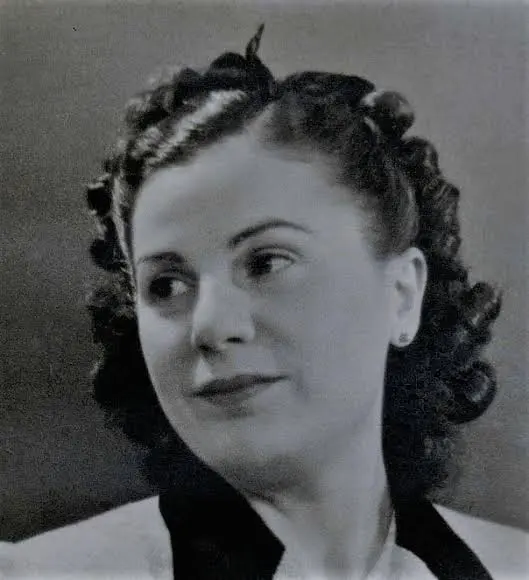
Born on November 2, 1910, into a family with strong Albanian roots, Tefta moved to Korçë with her family in 1921. It was there that her passion for music began to take shape. On June 26, 1926, she gave her first public performance, marking the beginning of a journey that would take her from Albania to some of Europe’s leading musical institutions.
In 1927, she moved to Montpellier, France, where she began formal vocal training. She later continued her studies at the prestigious Conservatoire National de Musique et de Déclamation in Paris, developing the technique and artistic discipline that would define her career.
Her first recordings came in 1930 in Paris, with the Pathé record company. However, her return to Albania in the mid-1930s marked a turning point. She began performing across the country, introducing audiences to a repertoire that placed classical arias alongside traditional Albanian songs.
Mozart, Verdi, Schubert, Puccini and Rossini featured in her classical repertoire. Yet Tashko-Koço also devoted herself to preserving the country’s musical heritage. She collected songs from different Albanian towns and brought their melodies to concert halls, giving traditional music a new artistic dimension.
Her recordings for Columbia in Italy, in 1937 and 1942, preserved many of these interpretations. Songs such as “Zare trëndafile”, “Bilbil çapkëni”, “Qante lulja lulen” and “Kroi i fshatit tonë” became closely associated with her voice. Her repertoire included around 89 Albanian folk songs, with 45 urban lyrical songs recorded for Columbia.
In 1939, she joined Marie Kraja and other Albanian performers at a folk music festival in Florence, Italy, presenting the country’s musical traditions to an international audience. Six years later, she appeared at the Belgrade Opera, where she performed the roles of Mimi in Puccini’s “La Bohème” and Rosina in Rossini’s “The Barber of Seville”.
Despite her international training and operatic success, Tashko-Koço remained deeply connected to Albanian music. Her interpretations gave urban folk songs a distinctive lyrical quality, preserving their character while introducing the precision and expression of classical vocal performance.
She married Kristaq Koço and had a son, Eno Koço, who later became a respected conductor and music scholar. Her career, however, was tragically short. She died in Tirana in 1947, aged just 37.
Albania later honoured her with the title “People’s Artist”. Yet her most enduring recognition lives in the recordings she left behind: a voice that bridged cultures, carried the melodies of Albanian cities across borders and helped shape the foundations of the country’s professional vocal tradition.
/a.c/
Të ngjashme
Latest News

Tirana Takes the Global Stage as “The Amazing Race” Arrives in Albania

Most read










 RTI