
 English
 Français
 Deutsch
 Italiano
 Turkish
 Greek
 Serbian
The 88th Anniversary of Albania’s First Archaeological Museum




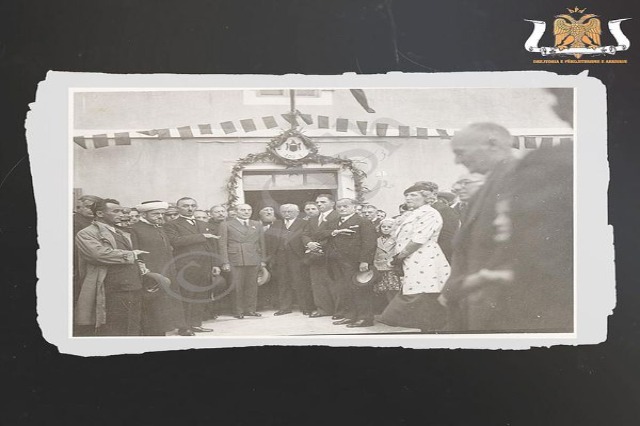
On October 8, 1936, the Archaeological Museum of Vlorë was inaugurated, marking it as the first archaeological museum in Albania.
In line with the historical context of the time, it was named after the monarch “Zogu I.” The building that housed the museum is permanently etched in the national memory, as it was here that Ismail Bej Vlora gathered the government following the declaration of Independence.
The museum was established and enriched with archaeological objects uncovered during excavations at Apollonia by a French archaeological mission led by archaeologist Léon Rey. Subsequently, the museum’s collection was expanded with artifacts from archaeological sites discovered in Vlorë and its surroundings, including ceramic vessels, glass objects, coins, terracotta items, and various figurines. The first floor of the museum was dedicated to displaying all the statues and columns found at Apollonia.
With the onset of World War II, the museum was bombed by the Italian army and subsequently looted. In response to the destruction and looting of the Vlorë Archaeological Museum, archaeologist Rey published a note of protest in the sixth issue of his journal Albania.
Today, a portion of the museum’s ancient collection that was salvaged can be found at the National Historical Museum, the Archaeological Museum of Tirana, the Historical Museum of Vlorë, and the Museum of the Archaeological Park of Apollonia.
/a.c/
Të ngjashme
Latest News

Most read










 RTI