
 English
 Français
 Deutsch
 Italiano
 Turkish
 Greek
 Serbian
The clothing of Dukagjin, Puka and Mirdita, a precious ethnographic treasure




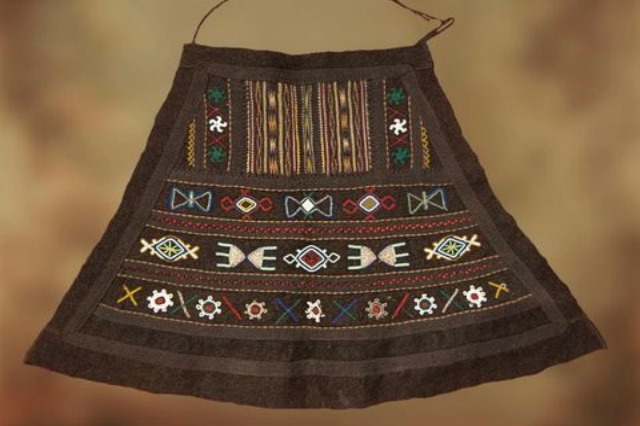
Folk costumes are one of the factors that distinguish us as a nation from neighboring countries. Many of them date back to the Illyrian period and have naturally been adapted to the times and circumstances in which they were used, and yet they still retain basic motifs that can be explained by prehistoric beliefs. Triangles, rhombuses, circles and crosses are found in northern clothing, known as symbols of health and fertility.
Regional Directory of Cultural Heritage of Shkodër has recently presented some clothing from the area of Dukagjin, Puka and Mirdita that are part of the private collection of Gjon Dukgilaj, revealing a precious ethnographic treasure.
One of the elements of the collection is the large apron (paranik) in the shape of a trapeze, which connects the area of Dukagjin with the area beyond the Drini River by connecting common elements between the apron of Puka and that of Dukagjin. Parts of the apron( paranik), always embroidered with very interesting motifs used before the death of Skanderbeg and Lek Dukagjini, the same colors present in the Dukagjini area. Then the xhubleta becomes black, and its reputation was inherited in the area of Mirdita and Dukagjini, who mourn Skanderbeg and Lek Dukagjini.
Another preserved element is the Mirditore women’s and girls’ sweatshirt – (mirditore jhybja).
The sweater is sleeveless and knee-length, decorated with black stripes and symbolic figures in red, cherry and brown or black. While the belt in white; shows that the daughter of the house was engaged and came from a large and rich family.
The apron (paranik) of the province of Dukagjin with purple fringe that was worn in wedding and funeral ceremonies, shows the colors that xhubleta once had, embroidered with very interesting motifs that recall the symbolism of mother Earth.

/k.s/
Të ngjashme



Latest News






Korça attracts autumn tourists as New Year bookings begin
Most read










 RTI