
 English
 Français
 Deutsch
 Italiano
 Turkish
 Greek
 Serbian
The International Film Festival is being promoted as a platform for environmental and human rights awareness through art




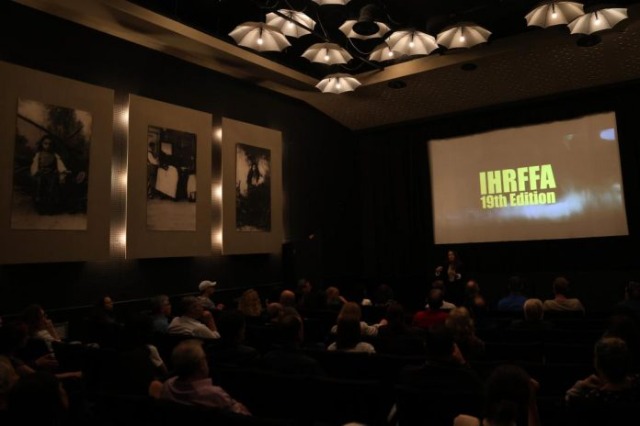
The International Human Rights Film Festival, held in Tirana from September 16–21, showcased 41 films and documentaries.
These films and documentaries were screened at various locations, including the Academy of Film and Multimedia “Marubi,” the Academy of Security, the Assembly of Albania, the School of Magistrates, the Authority for Information on Former State Security Documents, and the Center for Openness and Dialogue.
The goal was to reach diverse audiences and promote discussions on human rights, disinformation and manipulation, gender equality, political and identity oppression, freedom, and the legal and moral impacts of war, including the ongoing conflict in Ukraine. This effort aimed to challenge society to reflect, raise questions, and engage with the critical issues of our time.
With support from the European Union, the festival’s theme, *“Act Green for Now and the Future,”* emphasized the power of art in promoting universal values.
In his opening remarks, the EU Ambassador to Albania, Silvio Gonzato, highlighted that “Albania’s EU membership entails support for the principles of human rights, democracy, and the rule of law. These principles are fundamental to our partnership.”
“The theme of this year, *‘Act Green for Now and the Future,’* is a powerful reminder of our shared responsibility to protect the planet. And the reason is simple: there is no ‘Planet B.’ I am proud to support the International Human Rights Film Festival in becoming a year-round event with debates and discussions that reach beyond Tirana, inspiring collective action for the protection of human rights,” emphasized Ambassador Gonzato.
The Executive Director of the Festival, Kujtim Çashku, underlined the importance of environmental protection and fostering a sense of responsibility in society to keep our surroundings clean, both where we live and where we travel.
“Our festival seeks not only action but also thought. Economic development is one side of the coin; the other is how it affects our planet and why we face so many disasters, as species on Earth continue to disappear. Institutions everywhere are concerned about wars, and rightfully so, but this is also a war with its own victims, as we are destroying the Earth for future generations,” Çashku stated.
The festival opened with the film *”Telling Nonie,”* directed by Paz Schwartz. The film recounts the story of Tsafrir, an elderly Israeli operative, who reveals to Darwish that he had been involved in a targeted assassination operation in the 1950s, where her father, Egyptian Colonel Mustafa Hafez, head of military intelligence in Gaza, was killed. At eight years old, Nonie was left orphaned.
Sitting in chairs near Kibbutz Nahal Oz, on the Israeli border overlooking Gaza, where Darwish had lived as a child and where her father was killed, the two shake hands. Tsafrir seeks redemption, Nonie seeks peace, and throughout *”Telling Nonie,”* both testify to how Arabs and Jews fail to recognize each other’s pain and bring an end to the cycle of violence.
Following the screening, director Paz Schwartz made a passionate plea for peace.
“On October 5 of last year, I received an award for this film in Haifa. Two days later, on October 7, I was awakened by sirens and terrible news. The area near Kibbutz Nahal Oz, where Tsafrir and Darwish met, overlooking the border between Gaza and Israel, became the scene of the Hamas attack on October 7. When I filmed this documentary, I had great hopes for peace, but now, I truly don’t know,” said Paz Schwartz.
/a.c/
Të ngjashme
Latest News
Most read










 RTI