
 English
 Français
  Deutsch
 Italiano
 Turkish
 Greek
Greek Serbian
When will distribution of initial funds from EU’s Growth Plan for Western Balkans commence?





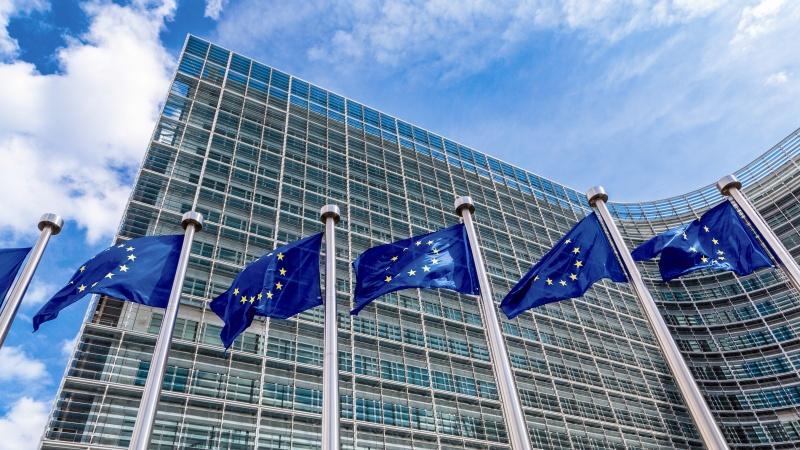
The distribution of the first funds from the EU’s Growth Plan for the Western Balkans is scheduled to begin when the European Commission approves the Reform Agendas submitted by each country. The deadline for countries to submit these agendas to the Commission is August 24th. Once a Reform Agenda receives approval, initial funds will be released by the end of this year.
According to the European Western Balkans, in May, EU institutions approved regulations establishing the Reform and Growth Facility for the Western Balkans, based on the Growth Plan officially presented by the European Commission in November 2023. The regulation came into force on May 24th, starting a three-month period for countries to submit their Reform Agendas—lists of measures each country must implement to qualify for funding from the Facility.
The EU regulation allocates a total of 2 billion euros in grants and 4 billion euros in loans from 2024 to 2027. These funds will be distributed among Albania, Bosnia and Herzegovina, Kosovo, Montenegro, North Macedonia, and Serbia based on their population and economic size.
As per the regulation, after submitting a Reform Agenda, a beneficiary can request the release of up to 7% of the total allocated amount as pre-financing. Subsequently, funds will be disbursed twice a year, subject to meeting payment conditions. However, experts are uncertain about the strictness of these conditions’ assessment.
The European Commission will evaluate whether a beneficiary meets two general prerequisites before releasing any funds. Firstly, beneficiaries must “support and respect effective democratic mechanisms, including a multi-party parliamentary system, free and fair elections, pluralistic media, an independent judiciary, and the rule of law, and ensure respect for all human rights obligations, including the rights of persons belonging to minorities.” Secondly, for Serbia and Kosovo, an additional prerequisite is to “engage constructively with measurable progress and tangible results in normalizing their relations.”
Additionally, general prerequisites for fund disbursement include macro-financial stability, sound management of public finances, transparency, and budget oversight.
Once these prerequisites are fulfilled, the Commission will assess whether a beneficiary has implemented specific measures outlined in their Reform Agenda, setting deadlines and conditions for fund disbursement twice a year.
If the European Commission finds that some conditions are not met, it will withhold funds corresponding to those conditions. If the recipient country fails to meet these conditions within a specified period, the Commission will reduce the amount of funds corresponding to those conditions.
The Reform Agendas should include measures that achieve the objectives of the Regulation, namely approximation with EU standards in the context of enlargement, regional economic integration and cooperation in the Western Balkans, gradual integration into the EU single market, and economic convergence.
According to the Regulation, Reform Agendas must be drafted in consultation with social partners and civil society organizations.
Most governments in the region have not yet published drafts of their Reform Agendas. However, Montenegro’s government released its draft at the end of June. This Reform Agenda includes 32 measures divided into four areas: business environment and private sector development, digital and green transition, human capital development, and rule of law.
This summarizes the key points regarding the distribution of funds under the EU’s Growth Plan for the Western Balkans and the conditions that must be met by beneficiary countries to receive these funds.
/k.s/
Të ngjashme



Latest News






Most read







 RTI
RTI