
 English
 Français
 Deutsch
 Italiano
 Turkish
 Greek
 Serbian
Ismail Qemali Leads Albania to Independence: Key Moments from November 1912




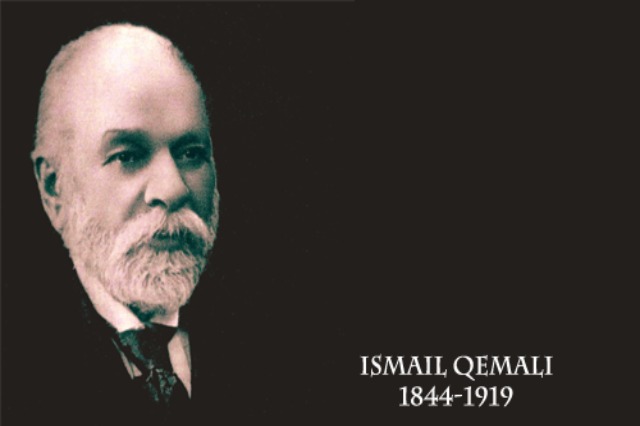
Ismail Qemali, a prominent leader of the Albanian National Movement, was born in Vlorë into one of the leading families of Southern Albania. After completing his primary education in Vlorë, he furthered his studies at a Turkish school in Thessaloniki and later at the “Zosimea” Gymnasium in Ioannina.
In 1860, he began his career as a translator for the Ottoman administration. Between 1862 and 1864, he served in local administration roles in Ioannina, Thessaly, and later Istanbul. Qemali was an active participant in the founding of the Albanian alphabet and the creation of a cultural society, collaborating with other notable figures such as Jani Vreto, Hoxha Tahsini, Kostandin Kristoforidhi, Pashko Vasa, and Sami Frashëri.
Rising through the ranks of the Ottoman Empire, Qemali was accused in 1877 of opposing Sultan Abdulhamid II’s policies and supporting the liberal ideas of Mithat Pasha. This led to his exile. During his time abroad, he remained connected with the Albanian National Movement, advocating for the Albanian language and cultural unity.
Qemali was also involved in the Young Turk movement, initially supporting the recognition of the rights of the Empire’s peoples. However, he later opposed the Young Turks after they established an authoritarian regime.
A key figure in the uprisings of 1910-1912, Qemali played a central role in Albania’s independence movement. On November 19, 1912, he announced the convening of a National Assembly, which declared Albania’s independence on November 28, 1912. He became the first head of the Provisional Government and Minister of Foreign Affairs.
Ismail Qemali’s foreign policy was uncompromising in its defense of Albania’s sovereignty. Despite the challenges of the time, his government laid the foundation for an independent Albanian state.
/a.c/
Të ngjashme

Latest News


Most read










 RTI