
 English
 Français
  Deutsch
 Italiano
 Turkish
 Greek
Greek Serbian
The EU excludes Kosova, Montenegro and Republika Srpska from grants




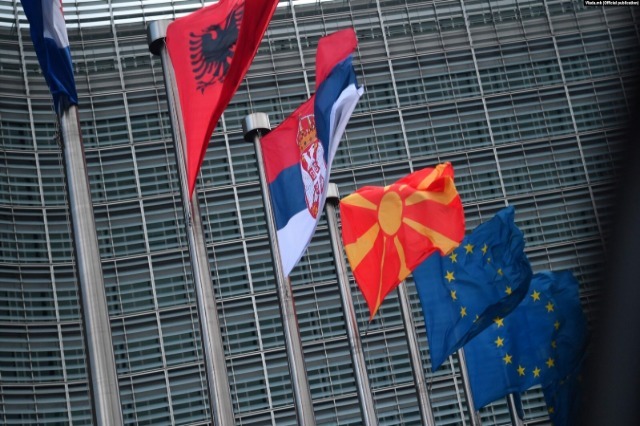
Kosova, Montenegro and the entity of the Republika Srpska in Bosnia and Herzegovina have been left out of the grants that the European Union has approved for projects within the Framework for Investments in the Western Balkans, reports Radio Free Europe.
The total value of the framework is 2.1 billion Euro. Serbia, Albania, North Macedonia and Bosnia and Herzegovina, respectively the Bosnian-Croat Federation, benefited from these investments.
Kosova has not benefited from the grants of the European bloc, since the EU imposed measures against Prishtina at the end of June, due to the non-fulfillment of Brussels’ demands for the de-escalation of the situation in the north of Kosova. Among the punitive measures is the suspension of all EU financial programs.
The Western Balkans Investment Framework is a joint initiative of the EU, financial institutions and donors, aimed at the socio-economic development and European perspective of the countries of the Western Balkans.
Kosova has benefited from this mechanism since 2009. Until 2021, there 30 projects supported in Kosova worth 1.8 billion Euro, within this framework.
The EU has temporarily suspended the work of all working groups for the Stabilization and Association Agreement, the invitations for Kosova’s participation in high-level meetings, the programming of funds for Kosova, including those from the IPA and the Western Balkans Investment Framework.
Projects include road construction, railway rehabilitation, central heating systems and sewage system improvement.
For the years 2023-2030, within the framework of this mechanization, other projects have been planned in Kosova, such as: the Prishtina-Nish Peace Highway, the Belgrade-Prishtina railway, solar heating for Prishtina, the waste water treatment plant for Prishtina etc.
In February of this year, the Government of Kosova said that it had also applied for two investment grants and four technical assistance grants in the Investment Framework, but did not specify more about them.
Not even Montenegro has benefited from the bloc’s grants, as the projects presented by Podgorica have been seen by the European Commission as “premature and inappropriate”.
“Montenegro has submitted investment projects in the fields of energy, environment and transport that have been assessed by the Western Balkans Investment Framework as premature for financing or unsuitable for financing,” confirmed EC spokeswoman Ana Pisonero through a written answer for the media.
She added that she hopes that Podgorica will continue with the preparation and maturation of these investment proposals for their serial presentation in the new calls within the Framework for Investments in the Western Balkans.
Pisonero also confirmed that Montenegro benefits from three technical assistance projects, worth 3.5 million Euro, within this call for the preparation of investments in the transport and energy sectors.
On June 30, the EC announced the approval of 14 major investment projects in the field of transport, energy, environment, human capital and support for the private sector in the Western Balkans.
Grants worth 303 million Euro have also been approved for infrastructure projects in Bosnia and Herzegovina. However, all grants will be focused on the Bosnian-Croat Federation and not on the Republika Srpska entity.
The grants, part of the EU’s 2.1 billion Euro investment package for the Western Balkans, will help several projects, including the construction of two sections of the pan-European highway linking Budapest with the Croatian port of Ploce.
Other projects in Bosnia, which will be supported by these grants, are related to the improvement of the water supply in Sarajevo and the rehabilitation of storage pumps in a hydroelectric plant in the south of the country.
The European Union has warned the president of Republika Srpska, Milorad Dodik, to stop secessionist rhetoric and movements that undermine the state of Bosnia.
The EU delegation in Bosnia and Herzegovina has not answered Radio Free Europe’s questions about why the projects in Republika Srpska have not been supported.
The approved funds for the region are more than half of the 528 million Euro in the form of grants from the Pre-Accession Instruments (IPA), along with some contributions from the block states and Norway, but also loans from international financial institutions.
/a.p./
Të ngjashme

Latest News



 RTI
RTI