
 English
 Français
 Deutsch
 Italiano
 Turkish
 Greek
 Serbian
Tirana’s Transformation from the 1990s Ruins to a European Capital: Rama Highlights Historic Efforts




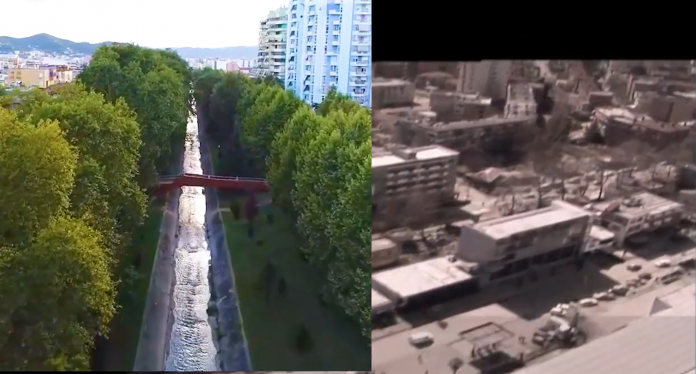
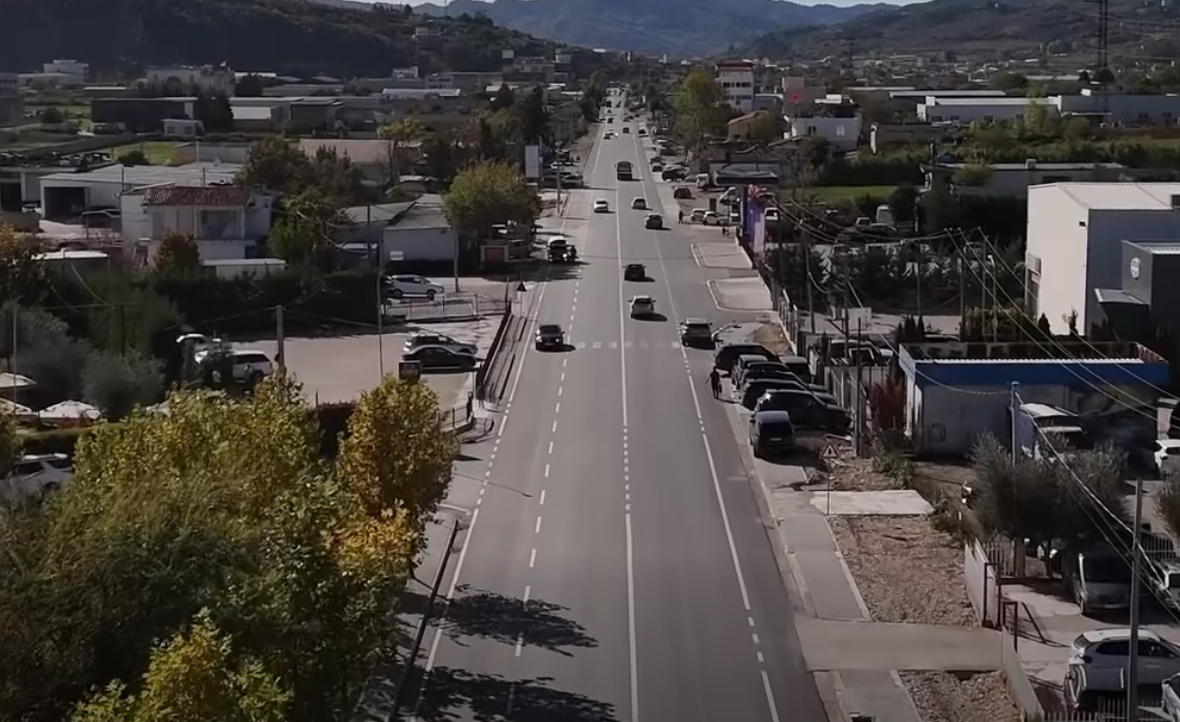
Tirana has undergone a profound transformation since the 2000s, emerging as one of the most visited destinations for foreign tourists and becoming a focal point for major international media outlets.
In a recent social media post, Prime Minister Edi Rama shared a video showcasing the radical changes the city has experienced, dating back to his time as the mayor of Tirana.
“For those born in the 90s or who were children in the early 2000s, watch this video memoir of the unparalleled fight for a European Tirana,” Rama wrote.
Edi Rama became the mayor of Tirana in the local elections of October 1, 2000, a position he held until 2011. In his inaugural speech, Rama emphasized the urgent need to reverse the city’s state of chaos, saying, “The citizens of Tirana demand that we turn the page on the last decade, which transformed Tirana into a city of total abuse and unparalleled cynicism. Tirana can no longer survive through chaos and anarchy. Tirana must live”.
The video presents various transformations across the city, from the Lana River, the facades of buildings, the Grand Ring Road, Skanderbeg Square, the Artificial Lake, Pazari i Ri [New Bazaar], the Small Ring, the Olympic Park, new schools, and sports facilities, among others.
“I am convinced that the return to identity will continue, just as I am certain that the citizens of Tirana see every day how the city is changing, showing signs of recovery and hope. I don’t speak through words, I speak through actions,” said Rama.
He also stressed the importance of creating sports facilities for children, adding, “We must do everything possible for all these children to have spaces to play, where they can spend their free time with dignity, not in holes and dust”.
In June 2003, during a session of the Special Assembly Committee, Rama responded, “I want to explain why this is not a collective battle and why it is you who have brought all these people, all these free citizens, all these honest professionals to this bench of the accused. These people with me are honest professionals”.
Through the video, Prime Minister Rama also highlighted remarks by current Tirana Mayor Erion Veliaj, who discussed several key strategic investments made in the city.
Skanderbeg Square is considered one of the capital’s major investments, with 50% of the space dedicated to greenery, while the other 50% is paved with stone brought from all Albanian regions. In 2016, Veliaj described the project’s initial challenges, saying, “As with any difficult beginning, there was debate. But when the work was completed, it became an extraordinary project, and today Tirana enjoys it”.
Other significant projects include the Children’s Playground at the Artificial Lake, Pazari i Ri [New Bazaar], the Small Ring, and the Olympic Park.
In 2017, Veliaj emphasized the importance of work over noise, stating, “I’ve heard the noise about the Playground, Pazari i Ri [New Bazaar], the Small Ring, and the Olympic Park. But I can tell you that a winning Albania is an Albania of work, not noise. I call on all, left and right, the noisy and the hard-working, to look beyond the noise and focus on the future of Tirana and Albania”.
Tirana’s Pyramid is another iconic building, which, thanks to the project by Winy Maas of the Dutch firm MVRDV, has been revitalized as the largest digital center in the Balkans.
In 2020, Veliaj highlighted the transformation of the Pyramid, saying, “We decided to turn the most iconic building in Tirana into an alternative school. After years of planning and conceptualization, we concluded that Winy Maas’ project from MVRDV would guide this two-year work, transforming the Pyramid into the largest digital center in the Balkans”.
Key projects and investments in Tirana:
– 74 kilometers of roads paved in residential blocks.
– 100 residential blocks rehabilitated and 49 neighborhoods completely re-qualified.
– 110,000 interventions for maintenance and repairs on sidewalks, roads, lighting, and drainage systems.
– 9890 interventions to clear spaces from informal constructions, and 950 interventions to make way for new roads and projects.
– The number of dedicated bus lanes has doubled, with 17 new urban bus lines and 469 new bus stations added.
– The upcoming fast bus line project and the Grand Ring Road have alleviated traffic congestion.
– Five underground parking lots and nine public parking spaces have been built.
– The Reconstruction Program has been one of the most successful initiatives, benefiting 25,100 families affected by the 2019 earthquake. The program provided 11,000 grants for light to moderate damages, repaired 526 buildings, and helped 3,000 families with major damages.
The government also provided 3337 families with immediate rent assistance, 708 individual homes were rebuilt, and two new urban neighborhoods (Kombinati and 5 Maji) were inaugurated. Additionally, 202 families benefited from new neighborhoods in five rural zones: Zall-Herr, Vaqarr, Baldushk, Ndroq, and Peza.
Social housing programs assisted 6127 families through 3651 soft loans, 2057 housing bonuses, and 419 social rental homes. Furthermore, eight social centers were transformed into community hubs, benefiting 3500 people.
Moreover, 2720 students from elementary and high schools are receiving excellence scholarships.
/a.p./
Të ngjashme
Latest News

Most read










 RTI