
 English
 Français
 Deutsch
 Italiano
 Turkish
 Greek
 Serbian
Orthodox Christians Celebrate the Day of Blessed Water




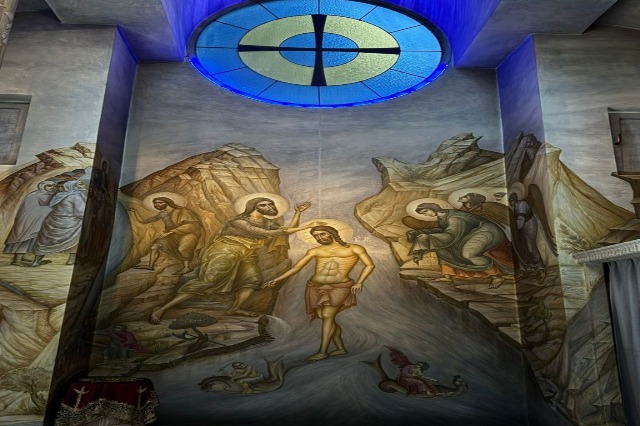
On January 6, Orthodox Christians in Albania and around the world celebrate Epiphany, also known as the Baptism of Christ, or the Day of Blessed Water.
Initially, this feast marked the manifestation of God in human form on Earth. It included the celebration of Christ’s birth, the adoration of the Magi, the events of His childhood, such as His circumcision and presentation at the Temple, and His baptism by John in the Jordan River.
The term ‘Epiphany’ means “the supreme manifestation.” It is often referred to as ‘Theophany’ in Orthodox liturgies, which translates to “manifestation of God.” The focus of this feast is on the revelation of Jesus as the human Messiah of Israel and the divine Son of God, one of the Holy Trinity along with the Father and the Holy Spirit.
A central feature of the Epiphany celebration is the Great Blessing of the Water, which occurs twice: once on the eve of the feast after the Divine Liturgy of St. Basil, and again on the feast day itself, after the Divine Liturgy.
The service begins with special hymns and the incense offering of water, placed in the center of the church.
On January 6, it is customary in many places to bless the water in the sea, river, lake, or any available water source. When this is not possible, the blessing takes place within the church.
During the chanting of festal hymns, the celebrant dips the cross into the water three times and continues by sprinkling the water in four directions, symbolizing the cardinal points.
The celebrant then blesses the congregation and their homes with the sanctified water, which is believed to bring salvation to all people and creation, touched by Christ through His “epiphany” in the flesh, for the life of the world.
The sanctification and sprinkling of the Epiphany water is not a pagan ritual. It represents a central truth in the Christian understanding of humanity, life, and the world. It is a liturgical expression showing that the vocation and destiny of creation is to be “filled with the fullness of God”.
/a.p./
Të ngjashme



Latest News




Most read










 RTI