
 English
 Français
 Deutsch
 Italiano
 Turkish
 Greek
 Serbian
306 Years Since the Premiere of Vivaldi’s “Scanderbeg” in Florence




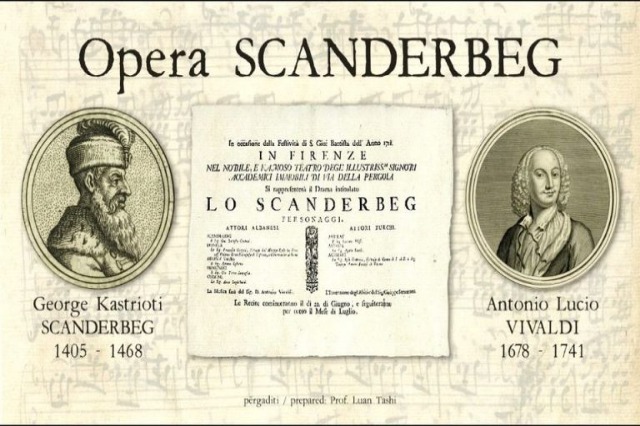
On July 22, 1718, Antonio Vivaldi’s opera “Scanderbeg” made its debut.
The opera, dedicated to the Albanian national hero George Kastrioti Skanderbeg, was first performed to celebrate the opening of the “Teatro di via della Pergola” in Florence. This prestigious theater, which had been operating since 1657 under the name “Teatro dell’Accademia degli Immobili,” was known for its innovative approach, particularly influenced by Venetian contributions to Italian opera in the early 17th century. “Scanderbeg” is one of Vivaldi’s rarely performed works, with the libretto by Antonio Salvi da Lucignano. While the complete score has not been preserved, four arias and two recitatives remain at the National Library in Turin. Vivaldi’s autograph is found in the second volume of the collection, which includes six fully preserved chapters of the music.
Historical records indicate that the opera was staged around 18 times in succession, with performances every three days. Scholars attribute the opera’s success during that season to the political context of the time. Skanderbeg’s figure, following numerous victories, became particularly interesting in Venice and other smaller Italian states. The story of this Albanian prince was highly relevant during periods of crisis and fear in Europe from the Ottoman expansion, though it quickly lost appeal once the immediate threat diminished. This may explain why “Scanderbeg” was performed for only a single season.
The opera occupies an important place in Vivaldi’s oeuvre, helping to extend his fame across the European opera scene.
In “Scanderbeg,” Vivaldi chose a historical figure rather than a mythological one. Skanderbeg was a notable figure in both Italian and European memory—not only an influential political leader but also the only one who never suffered a defeat by the Ottomans.
/a.p./
Të ngjashme


Latest News




Most read










 RTI