
 English
 Français
 Deutsch
 Italiano
 Turkish
 Greek
 Serbian
Preserving Tradition: A 120-Year Legacy of Shkodër’s Master Tailor




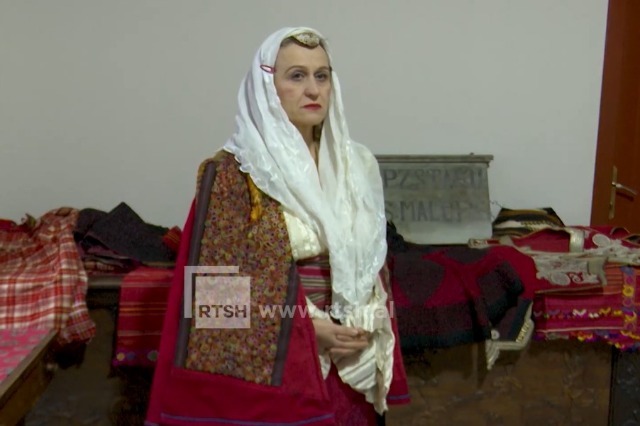
Traditional clothing is a true reflection of Albania’s cultural heritage. In the early 1900s, Shkodër was a bustling commercial hub, and its people were renowned for their expertise in trade. Among them was Filip Staku, a master tailor of traditional costumes. His granddaughter, Albulena Staku, treasures some of his 120-year-old works with great care.
“These dresses were worn by Catholic women from the city of Shkodër. This particular one dates back to the 1800s-1900s. My grandparents had a shop where they made traditional costumes. My grandfather, Filip, crafted the costumes himself, as did my grandmother, Qile. They sourced materials from Trieste. In their shop, they had an embroidery machine that helped them create these traditional garments. Filip worked in the old bazaar for 60 years. He would leave at 7 a.m., go to the bazaar with his cart, and return at 7 p.m.,” says Albulena.
Another cherished object from that time is her grandmother’s dowry chest.
“My grandmother Qile received this wooden chest as part of her dowry. It was a red dowry chest, as it was called back then, and it was a gift from Zef Dajçi when she married. Zef Dajçi was a sculptor. The chest is made of walnut wood and has been preserved for over a century. This chest is important because it tells the story of my family’s history, how my grandparents worked on folk costumes, and how they were involved in trading them,” Albulena explains.
Traditional clothing holds its own rich history. It is an invaluable treasure of our people’s cultural traditions.
/a.p./
Të ngjashme
Latest News


Most read










 RTI