
 English
 Français
 Deutsch
 Italiano
 Turkish
 Greek
 Serbian
The Kabashi Church at the Monastery of Saint Julita, IKTK approves the list of cultural monuments to be restored




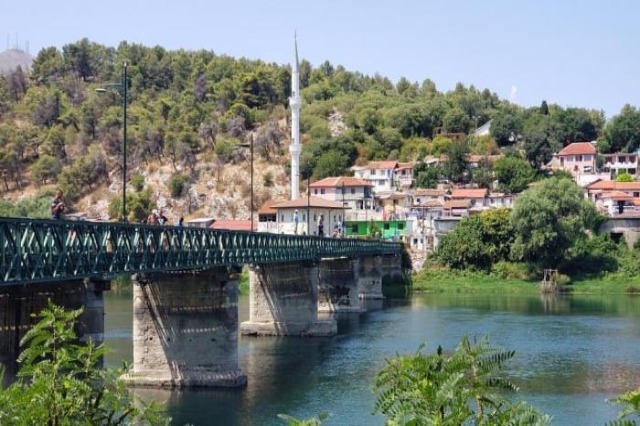
In continuation of the efforts for the maintenance and restoration of Cultural Monuments, the National Institute of Cultural Heritage, in collaboration with the Regional Directorates of Cultural Heritage (DRTK), has drafted and approved projects in the National Council of Cultural Heritage (KKTKM), thus paving the way for their implementation.
According to the approved decisions, several restoration and consolidation projects are set to be implemented. Among these are the Buna Bridge, Kabashi Church, the Medieval Stone Bridge, and the Monastery of Saint Julitta and Cyriacus.
The Buna Bridge is a Category II Cultural Monument. It was constructed with funds from the Turkish Government in 1889, initiated by the governor of Shkodra, Qazim Pasha. The bridge was built using cement piers connected with iron beams and wooden planks for the upper layer. In 2017, the bridge underwent restoration, including changes to the wooden layer and painting of the metal structure. Despite these interventions, the Buna Bridge requires further work, including the replacement of all planks in the upper layer, oiling all wooden materials with linseed oil, and applying anti-moth treatment.
Kabashi Church, located in the village of Kabash, Puka, is a cultural asset with the status of a Category I Cultural Monument. The church is believed to have been built in the late 19th century. The latest inspection was conducted in April 2024 by specialists from DRTK Shkodra to assess the issues the church faces and to provide a clear overview of its current condition. While the structure of Kabashi Church, although in ruins, is well-preserved, it requires consolidation and maintenance work, including cleaning of roots and vegetation around and on the masonry, consolidation of stones and the top of the masonry, wall restoration, and injection.
The Medieval Stone Bridge is a Category I Cultural Monument located in the village of Upper Grabova in the Gramsh district. Constructed around the 17th century, it is a one-arch type bridge. The planned restoration interventions for the Medieval Stone Bridge include mechanical cleaning of vegetation and biological patina, injection and grouting with lime mortar of the masonry, and stone wall restoration using the dry-stone technique.
The Monastery of Saint Julitta and Cyriacus, a Category I Cultural Monument, is located in Dhuvjan, in the Gjirokastra region. Planned restoration interventions include the restoration of the roof with stone slabs, renovation of the wooden entrance gate, structural consolidation of the entrance porch, reconstruction of the roof and stone columns, reconstruction of the porch walls, stabilization of masonry, waterproofing and roofing works, restoration of wooden doors, mending damaged masonry with wooden elements, and cleaning the monastery of dirt and deposits.
/a.c/
Të ngjashme


Latest News



American outlet TheStreet highlights Tirana among 2027 travel trends
Most read










 RTI